
By Brian D. Kowell
The Cleveland Civil War Roundtable
Copyright © 2026, All Rights Reserved
The weather was nasty, cold, windy, and rainy in Vicksburg, Mississippi on Christmas Eve 1862. The Civil War, supposed to last only 90 days, had dragged on now for 21 months. Despite the inclement weather, Mrs. Emma Balfour was determined to celebrate the season by hosting her annual Christmas Eve ball.
Forty-four-year-old Emma Harrison Balfour tried to convince her husband, Dr. William T. Balfour, that despite the war, they should have the party. She reasoned, hadn’t the Confederate forces been successful? Didn’t they save Vicksburg from Major General Ulysses S. Grant and his northern hordes by destroying his supply depot at Holly Springs, forcing the Yankees to retreat? Besides, her hope was to heighten the spirits of her friends and of the soldiers, and also to celebrate the victory and the Yuletide.
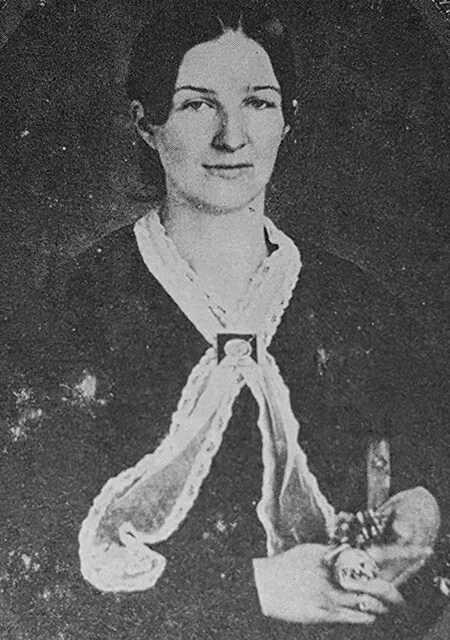
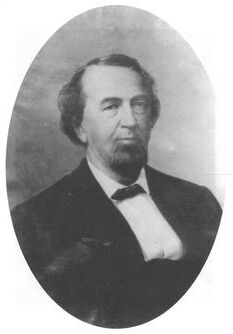
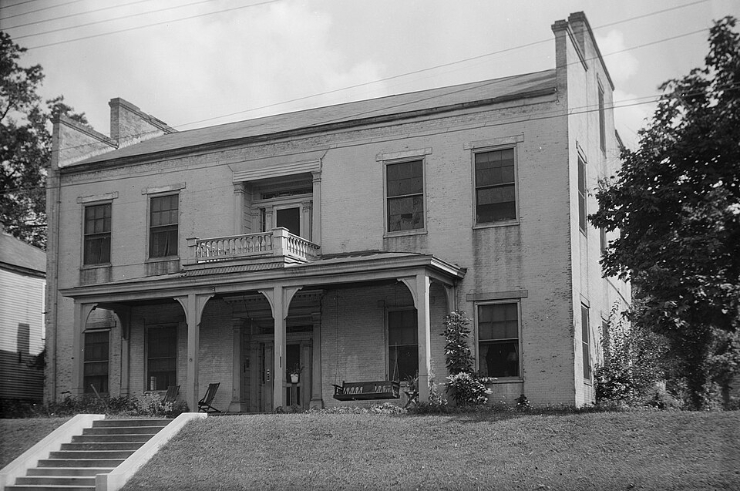
Her husband relented, and the house was cleaned and decorated. Invitations were sent to all of her friends, all of whom were prominent citizens of Vicksburg. Invitations were also sent to the senior Confederate officers garrisoned in the city. On the day of the party, the tables were set with food and drink. On the evening of December 24, guests began to arrive at the Balfour’s opulent hilltop home at the corner of Cherry and Crawford Streets.
The two-story brick mansion was ablaze. Light reflected from the crystal chandeliers, and candlelight illuminated each room. With the arrival of the musicians, both music and light filled the house and spilled outside into the rainy night. The guests were attracted like flies, and the home was soon filled with revelers. The ladies, dressed in their finest crinoline gowns, swirled and danced with their partners on the dance floor. Lively conversations and laughter permeated the rooms.
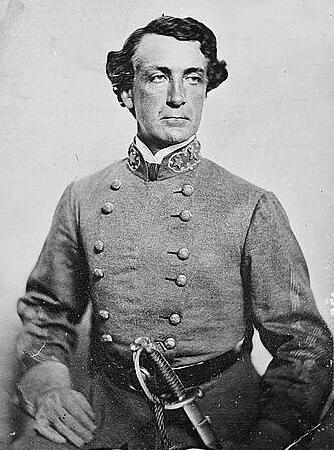
Among the soldiers in attendance was Major General Martin Luther Smith, Vicksburg’s garrison commander, and his subordinate, Brigadier General Stephen D. Lee. All were enjoying the ball and forgetting the war and the cold, wet weather outside.1
Not everyone was invited to the party. Major Lee J. Daniels, Major E.P. Earnhearst, and Colonel Philip Hadley Fall of the Confederate Signal Corps were on duty at their lonely signal stations. “After the fall of Memphis, the Mississippi River was open to Union gunboats as far down as Vicksburg,” wrote General Lee. “As early as October 1862, a telegraph station was established at DeSoto on the river bank opposite Vicksburg, with Colonel Fall as operator. It was connected with a station at the Tibbotts’ plantation, eleven miles south of Lake Providence.”2
Unlike the Balfours, or General Smith and General Lee, these Signal Corps officers spent their Christmas Eve quietly working. “Major Earnhearst, after telling me of the danger of a picket outpost,” Daniels wrote, “asked me to go to Point Lookout, Louisiana, eleven miles below Lake Providence and sixty-five miles above Vicksburg, the terminus of the little private telegraph line owned by that rich planter Horace B. Tibbotts.” Tibbotts’ plantation was three miles from the river, so Daniels and Earnhearst occupied a small cabin overlooking the river where they could watch the river traffic and stay dry.3
“It was Christmas Eve about 8:45pm,” Major Daniels recalled. “Dear old Major E.P. Earnhearst and I were in our ‘eerie’ playing ‘Old Sledge’ when a little black girl who lived on the place came in.” She told them that they should come outside as she heard a boat coming. Earnhearst did not believe her and said that she must be dreaming. She insisted that she had heard the sound, imitating the choo, choo, pat, pat, pat sound of the steam escape valve and the slap of a paddlewheel on the water.
Daniels and Earnhearst stepped outside onto the building’s small porch and listened intently. They soon heard faint sounds. Curious, the two lookouts trekked through the woods about one-eighth of a mile to the water’s edge for a closer look. Standing in the dark, with cold rain pelting them, they smoked and waited.
Daniels remembered: “Waiting perhaps thirty minutes, we could hear the panting and pat, pat, pat [when suddenly] a monster turned the bend, two miles above us, and came slowly as if feeling the way. It was a gunboat … then another. Just then some sparks flew out of [Earnhearst’s] pipe and I grabbed the pipe and extinguished the fire, telling him that those [damned Yankees] would fire a volley at the crack of a match. By now the large black devil was about abreast of us in easy gunshot [range].”4 Despite each being armed with a shotgun, they realized it was suicide to fire, so they began to count the vessels as more loomed out of the darkness around the river’s bend.
The two officers must have been in a state of shock as they watched and counted 7 gunboats and 59 transports loaded with bluecoats. It was the Union fleet, commanded by Rear Admiral David Dixon Porter, escorting Major General William T. Sherman’s 33,040 men destined to land at Chickasaw Bayou and overwhelm the Confederate defenses north of Vicksburg.5
As soon as the last transport passed, the two made their way back to the lookout post. Daniels “jumped on my little bay filly and fairly flew” the three miles through the Louisiana woods, arriving at Tibbott’s telegraph station after midnight.
Colonel Fall was sitting quietly at the DeSoto telegraph terminus, wishing himself a Merry Christmas, when suddenly the keys began to clatter. Surprised, Fall answered the call. “Golly, old fellow what’s up?”
Agitated at the prospect of Vicksburg being captured, Daniels lost all perspective of time. He thought he had been frantically summoning Fall for 30 minutes instead of 30 seconds before Fall responded. Daniels tapped out, “Great God, Phil, where have you been? I have been calling and the river is lined with boats, almost a hundred just passed my lookout.” Daniels implored, “God speed you, rush across and give the alarm.”
Fall responded, “God bless you, Lee, bye, bye. We may never meet again,” and signed off.6
Colonel Fall had to get word to the defenders in Vicksburg, but there was no easy way. Fall had to cross the Mississippi alone in a small open boat. The intrepid officer jumped into the boat, lit a red signal lamp to signify to the gunners at Vicksburg that he was friendly, and began to row.
The rain and wind whipped the brown water into a frenzy. “I was in dread of my red light being extinguished by the high waves. The Mississippi was very rough; had my light gone out, our batteries would have annihilated me,” Fall remembered. He also worried about being swamped or capsized, “[But] with what information as I possessed, I would have made the attempt in the face of death.”7 It took Fall approximately 30 minutes to row across the almost mile expanse of the river. He arrived soaked. Disembarking, Fall trudged up the Vicksburg bluffs “muddy and woebegone.”
Inquiring of General Smith’s whereabouts, the bedraggled officer set off for the Balfour house. Arriving, he saw the lights and heard the music as the ball was still in progress. The sodden, soaked, and mud-caked colonel climbed the stairs. Entering the foyer, the dripping officer left muddy footprints as he crossed the dance floor toward General Smith. The music abruptly stopped as the horrified guests silently watched, giving the colonel a wide berth.
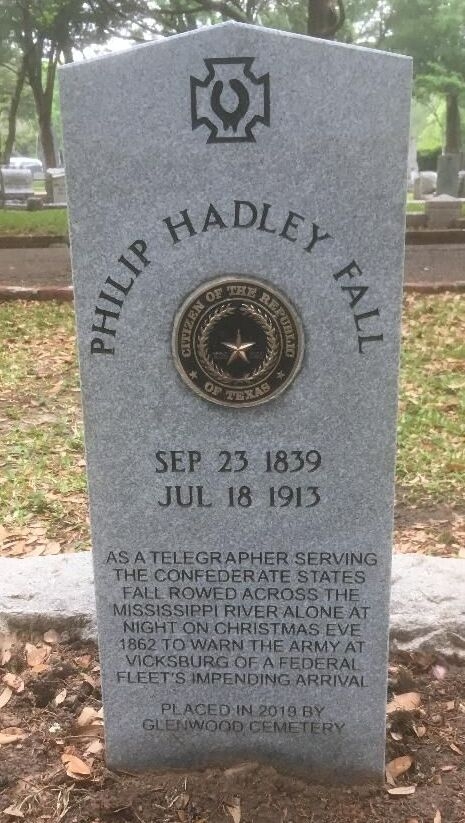
The text on the tombstone reads, “As a telegrapher serving the Confederate States, Fall rowed across the Mississippi River alone at night on Christmas Eve 1862 to warn the army at Vicksburg of a Federal fleet’s impending arrival.”
Smith was startled and irritated by the intrusion. Frowning and critically scanning the unkempt colonel, he gruffly demanded, “Well, sir, what do you want?” Saluting, Fall informed the general of the message he had received an hour and a half earlier. When the words came from Fall’s mouth, the color drained from Smith’s face. Ashen and gray, the general quickly composed himself. Drawing himself erect, he proclaimed in a loud voice, “This ball is over. The enemy are coming down the river and all non-combatants must leave the city. All military personnel are to rejoin their regiments immediately.”8
Turning back to Fall, the general softened and apologized to the colonel for his harsh tone and thanked him. Those officers in attendance at the ball bade their partners or loved ones goodbye. Under the circumstances, each and every one understood that they might never meet again. With that they departed.
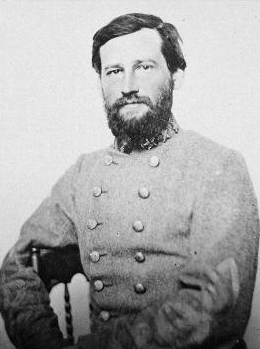
On Christmas Day, General S.D. Lee along with six regiments and two batteries marched to defend the Walnut Hills overlooking the Yazoo River. Fall accompanied Smith to his headquarters to telegraph Lieutenant General John Pemberton in Jackson of the Yankee threat. In response to this information, Pemberton dispatched reinforcements to Vicksburg. The following day, Sherman ordered fierce assaults at Chickasaw Bayou which proved unsuccessful. The Yankees re-embarked and left with Porter’s fleet.
Back at Tibbotts’ Major Daniels received a surprise on Christmas morning when Yankee cavalry arrived and took him prisoner. Luckily, Major Earnhearst escaped, as he had departed on horseback earlier to alert Lieutenant General Edmund Kirby Smith of the Yankee invasion.
The victorious Confederates would remember the Balfour Christmas Eve ball and compare it to Napoleon interrupting the Austrian ball on the eve of Waterloo, which was made immortal in Lord Byron’s famous poem, “The Eve of Waterloo”:
There was a sound of revelry by night,
And Belgium’s capital had gathered then
Her beauty and her chivalry, and bright
The lamps shone o’er fair women and brave men.
A thousand hearts beat happily; and when
Music arose with its voluptuous swell,
Soft eyes looked love to eyes which spake again,
And all went merry as a marriage bell;
But hush! hark! a deep sound strikes like a rising knell!
Did ye not hear it? – No; ’twas but the wind,
Or the car rattling o’er the stony street;
On with the dance! let joy be unconfined;
No sleep till morn, when youth and pleasure meet
To chase the glowing hours with flying feet.
But hark! – that heavy sound breaks in once more,
As if the clouds its echo would repeat;
And nearer, clearer, deadlier than before;
Arm! arm! it is – it is – the cannon’s opening roar!
Within a windowed niche of that high hall
Sate Brunswick’s fated chieftain; he did hear
That sound the first amidst the festival,
And caught its tone with death’s prophetic ear;
And when they smiled because he deemed it near,
His heart more truly knew that peal too well
Which stretched his father on a bloody bier,
And roused the vengeance blood alone could quell;
He rushed into the field, and, foremost fighting, fell.
Ah! then and there was hurrying to and fro,
And gathering tears, and tremblings of distress,
And cheeks all pale, which, but an hour ago,
Blushed at the praise of their own loveliness.
And there were sudden partings, such as press
The life from out young hearts, and choking sighs
Which ne’er might be repeated; who would guess
If ever more should meet those mutual eyes,
Since upon night so sweet such awful morn could rise!
And there was mounting in hot haste; the steed,
The mustering squadron, and the clattering car,
Went pouring forward with impetuous speed,
And swiftly forming in the ranks of war;
And the deep thunder, peal on peal afar;
And near, the beat of the alarming drum
Roused up the soldier ere the morning star;
While thronged the citizens with terror dumb,
Or whispering, with white lips – “The foe! they come! they come!”
It was due to the vigilant and intrepid telegraphers – Lee Daniels and Philip Fall – that General S.D. Lee’s infantry and artillery rushed to Chickasaw Bayou to repulse the Federals. Lee stated, “They ran great risks and endured many hardships. They prevented the almost complete surprise of the Confederate Army at Vicksburg on December 1862.”9 Their patriotic work saved Vicksburg that Christmas.
Alas, Mrs. Balfour never hosted another Christmas Eve ball, as Vicksburg fell to Grant seven months later.

Footnotes (Click on the book links below to purchase from Amazon. Part of the proceeds from any book purchased from Amazon through the CCWRT website is returned to the CCWRT to support its education and preservation programs.)
1Balfour, Emma Harrision, Mrs. Balfour’s Civil War Diary: A Personal Account of the Siege of Vicksburg, Gordon A. Cotton, ed., 2008. Emma Balfour’s Diary, Mississippi Department of Archives and History, Jackson Mississippi. Winchel, Terence J., The General’s Tour: The Battle of Chickasaw Bayou, Blue and Gray Magazine, Vol. 26, No. 3, 2009-2010, pp. 53-65. Winschel, Evan, Emma Balfour, a ball, a siege and a diary, Vicksburg News, March 16, 2025.
2Lee, Stephen D., Details of Important Work by Two Confederate Telegraph Operators, Christmas Eve, 1862, Which Prevented the Almost Complete Surprise of the Confederate Army at Vicksburg, 13 vols., Oxford, MS, Mississippi Historical Society, 1904, Vol. 8, pp. 51-55. Smith, Timothy B., Early Struggles for Vicksburg: The Mississippi Central Campaign and Chickasaw Bayou, October 25-December 31, 1862, Lawrence, Kansas, University Press of Kansas, 2022, pp. 296-298.
3Lee, Two Confederate Telegraph Operators, p. 53.
4Ibid, p. 53.
5Smith, Early Struggles for Vicksburg, p. 286. Bearss, Edwin Cole, Vicksburg Is the Key: The Campaign for Vicksburg, Vol 1, Dayton, OH, Morningside Press, 1985, p.150.
6Lee, Two Confederate Telegraph Operators, p. 53.
7Ibid, p. 54.
8Ibid, p. 54. What Telegraph Men Did for Vicksburg Confederate Veteran Magazine, Vol. 10, No. 2, Nashville, TN, February 1902, p. 72.
9Lee, Two Confederate Telegraph Operators, pp. 51, 55.