
By Don Iannone
The Cleveland Civil War Roundtable
Copyright © 2026, All Rights Reserved
Editor’s note: This article was originally published in The Charger in March 2026.
Introduction
This article discusses the use of the Monroe Doctrine by the U.S. Government during the Civil War in response to France’s territorialization of Mexico, a subject of interest to me over the years. The idea for this article was sparked by President Donald Trump’s invocation of the Monroe Doctrine as partial justification for the 2026 U.S. military intervention in Venezuela. My earlier study of the Monroe Doctrine provided the footing for me to write this piece.
Few foreign policy statements in American history have enjoyed a longer or more elastic life than the Monroe Doctrine. Announced in 1823 as a warning to European empires, it evolved over the nineteenth century into a symbol of American hemispheric authority. The U.S. Civil War (1861–1865) marked the doctrine’s most serious test prior to the twentieth century, revealing both its limits and its latent strength. Examining the Monroe Doctrine in the context of the Civil War clarifies what the doctrine originally meant, how it was understood by mid-century policymakers, and how it emerged from the war transformed from aspiration into enforceable policy.
Origins of the Monroe Doctrine (1823)
The Monroe Doctrine arose from a convergence of international anxieties in the early 1820s. Most of Spanish America had won independence after long revolutionary wars, while Europe, fresh from defeating Napoleon, was dominated by conservative monarchies committed to restoring old regimes. The Holy Alliance (Russia, Austria, and Prussia) raised fears that Europe might assist Spain in reclaiming its former colonies (Perkins, 1963).
At the same time, Russia asserted expansive territorial claims along the Pacific Northwest, alarming American leaders (Sexton, 2011). Britain, though a monarchy, opposed renewed Spanish control and favored open markets in Latin America. British Foreign Secretary George Canning proposed a joint Anglo-American declaration opposing European recolonization. The United States declined formal partnership but adopted the underlying idea.
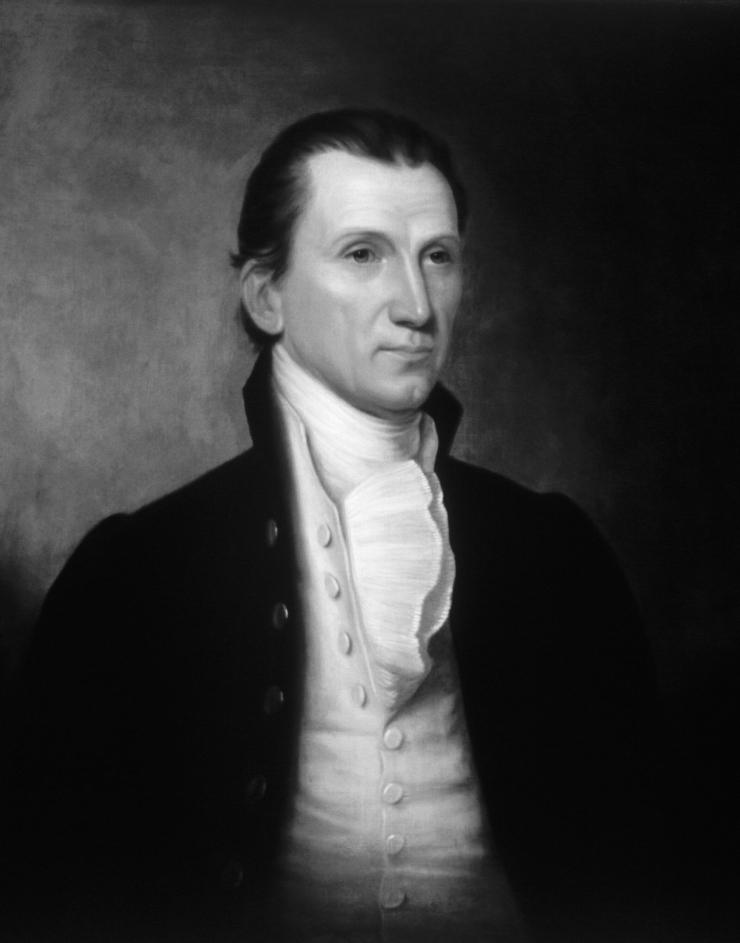
In his Seventh Annual Message to Congress on December 2, 1823, President James Monroe articulated what later became known as the Monroe Doctrine. Its core principles were straightforward: (1) no new European colonization in the Western Hemisphere; (2) nonintervention by European powers in the affairs of independent American states; (3) U.S. noninterference in European wars and internal European affairs; and (4) recognition of existing European colonies, but opposition to their expansion. Although force was never explicitly promised, the message asserted that European interference would be viewed as “dangerous to our peace and safety” (Monroe, 1823/1965).
At the time, the doctrine relied less on American power than on British naval dominance, which effectively discouraged recolonization for decades (Perkins, 1963). Still, it established a conceptual boundary: the Western Hemisphere was politically distinct from Europe.
The Doctrine Between 1823 and the Civil War
For much of the antebellum period, the Monroe Doctrine remained more rhetorical than operational. American leaders cited it selectively, often to oppose European ambitions without committing to military confrontation. During the 1840s, it surfaced in debates over Texas, Oregon, and Central America, especially in response to British activity, though not always by name (Sexton, 2011).
The era also saw U.S. expansion that reshaped the hemisphere and sharpened foreign-policy anxieties. The Mexican-American War (1846–1848) began after the U.S. annexation of Texas and a dispute over the Texas-Mexico border. U.S. forces won major campaigns culminating in the fall of Mexico City in September 1847, and the Treaty of Guadalupe Hidalgo (February 1848) transferred vast territories to the United States. The war did not “apply” the Monroe Doctrine in a formal sense, but it intensified U.S. claims to continental power and heightened European attention to American ambitions, an important backdrop for how the doctrine was read on both sides of the Atlantic by mid-century (Sexton, 2011).
Crucially, the doctrine did not authorize American intervention in the internal affairs of neighboring republics. Its primary target was Europe: limiting European colonization and political control, rather than granting the United States an open-ended mandate to manage the domestic politics of independent American states (Perkins, 1963). This distinction would matter greatly during the Civil War.
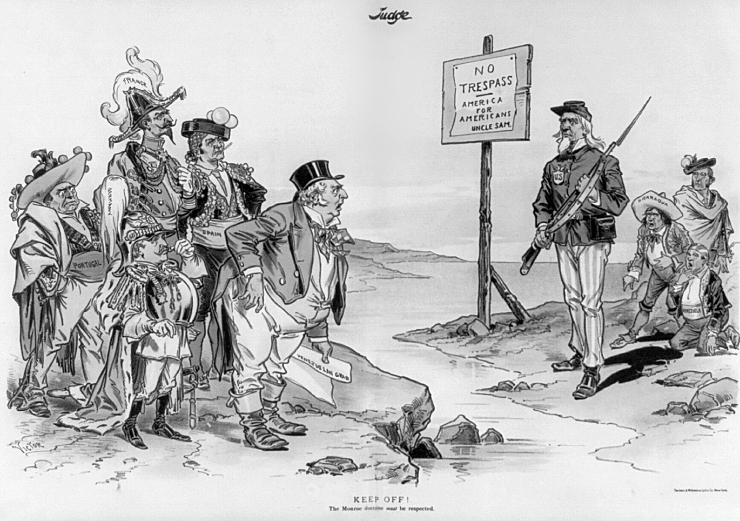
By 1860, the United States had grown substantially in territory and population but remained diplomatically vulnerable. European powers still commanded larger armies and navies. When civil war erupted in 1861, the Monroe Doctrine faced its gravest challenge: could a divided republic defend a hemispheric principle?
The Civil War Crisis: Europe Watches, France Acts
The Lincoln administration’s greatest diplomatic fear was foreign recognition of the Confederacy, particularly by Britain or France. Such recognition could have legitimized Southern independence and possibly triggered intervention (Jones, 1960). The Monroe Doctrine lurked behind these concerns, shaping how Union officials framed European actions in the hemisphere.
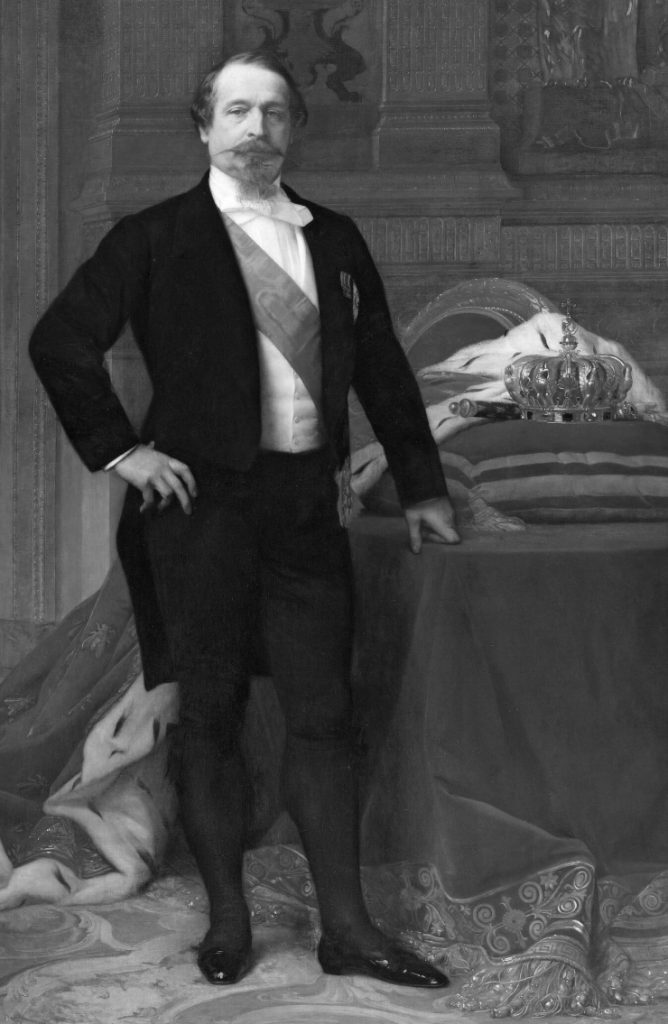
France posed the most direct challenge. Under Napoleon III, France pursued an ambitious foreign policy designed to restore French prestige and influence. The American Civil War presented an opportunity. With the United States distracted, France intervened in Mexico in 1861, initially citing unpaid debts as justification (Sexton, 2011).
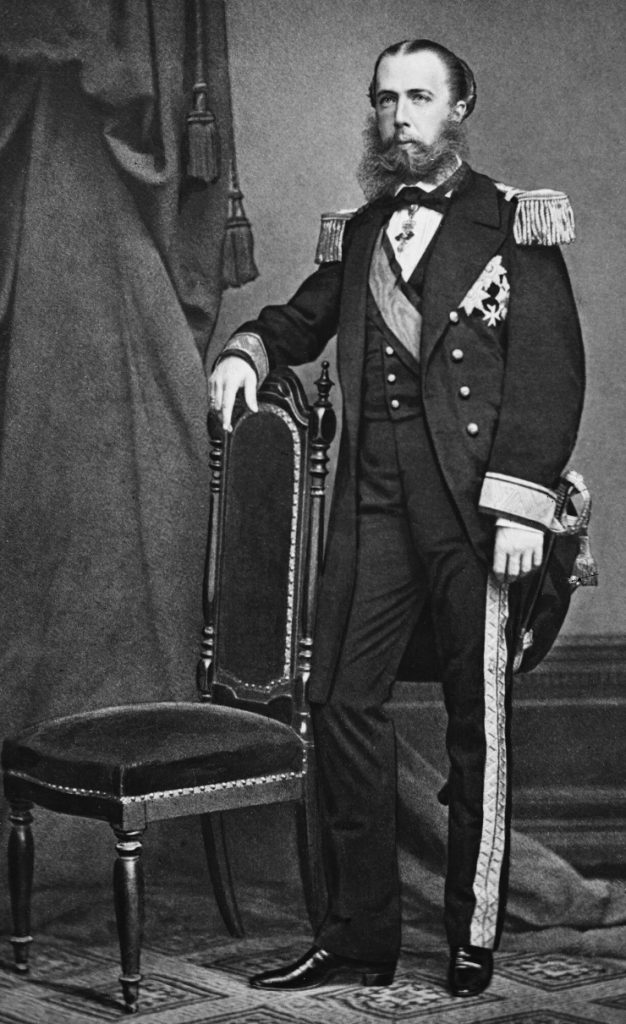
The deeper rationale was strategic. Napoleon III envisioned a Catholic, monarchical Mexico aligned with French interests and serving as a counterweight to the growing power of the United States. Installing Archduke Maximilian of Austria as emperor in 1864 marked a bold assertion of European political influence in the Western Hemisphere (McPherson, 2008). This action directly contradicted the spirit, if not yet the enforceability, of the Monroe Doctrine.
Union Diplomacy and the Doctrine During the War
Despite the provocation, the Lincoln administration responded with restraint. Secretary of State William H. Seward protested diplomatically but avoided confrontation. The Union could not afford a war with France while fighting for survival at home (Jones, 1960).
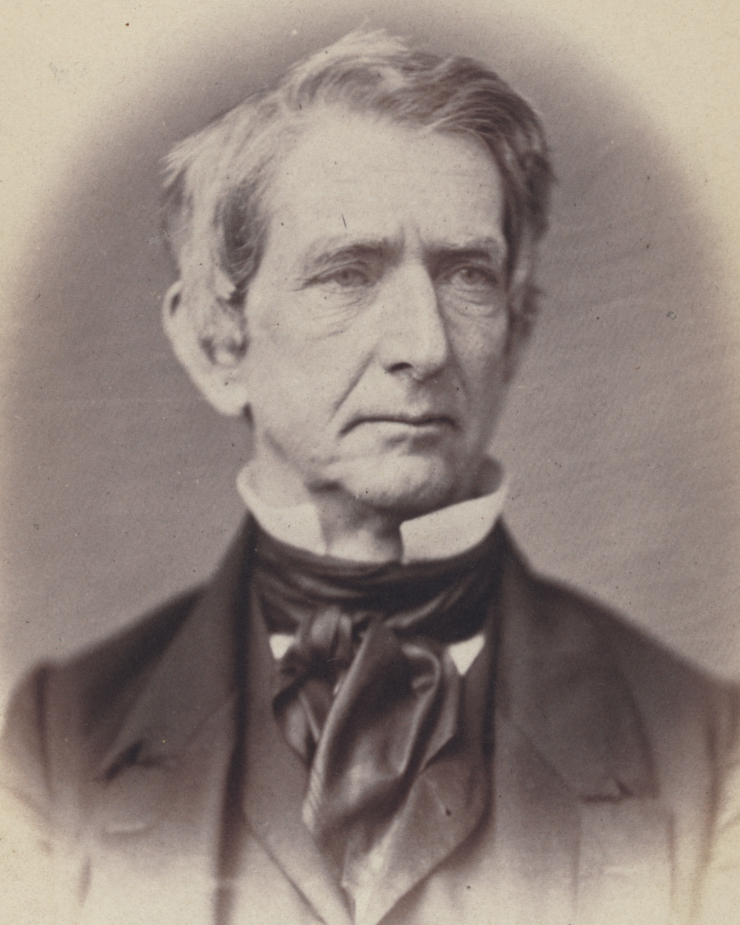
Instead, Seward emphasized continuity: the United States continued to recognize the Mexican Republic under Benito Juárez as the legitimate government, refused to acknowledge Maximilian’s regime, and repeatedly affirmed opposition to European-imposed monarchy in the Americas (Sexton, 2011).
In this period, the Monroe Doctrine functioned as a long-term warning, not an immediate weapon. Its force depended on the assumption that once the Civil War ended, the United States would again be capable of backing its principles with power.
After Appomattox: Enforcement at Last
Union victory in 1865 transformed the situation. With the Confederate threat eliminated, the United States possessed a massive veteran army and renewed diplomatic confidence. Washington made clear to France that its presence in Mexico violated American policy (McPherson, 2008).
The pressure was indirect but unmistakable. The United States stationed troops along the Rio Grande, supplied arms to Mexican republican forces, and reminded France that continued occupation would be unacceptable (Sexton, 2011). Facing growing threats in Europe, particularly from Prussia, Napoleon III withdrew French troops in 1866–1867.
Maximilian was captured and executed by Mexican forces in 1867. The Monroe Doctrine did not topple the empire singlehandedly, but it framed the outcome: for the first time, the United States had successfully opposed a European-installed regime in the Americas, reinforcing the doctrine with power rather than rhetoric (Perkins, 1963).
The Monroe Doctrine After the Civil War
In the decades following the Civil War, the Monroe Doctrine gained new prominence. American leaders increasingly treated it as a unilateral claim of hemispheric priority. Later interpretations and expansions, especially in the late nineteenth and early twentieth centuries, would move far beyond the 1823 statement’s original purpose, culminating in the Roosevelt Corollary (1904), which asserted a U.S. policing role in the hemisphere (Sexton, 2011).
Civil War experience shaped this evolution. The French intervention in Mexico demonstrated that the doctrine could survive American weakness but required unity and capacity to prevail. The war thus marked a turning point: the Monroe Doctrine emerged as a credible assertion of hemispheric authority, no longer dependent on British enforcement (Perkins, 1963).
Conclusion
The Monroe Doctrine’s role in the Civil War reveals its true character. It was not a standing authorization for war, nor an empty slogan. It was a principle deferred and tested by crisis and validated by recovery. During the Civil War, the doctrine constrained European ambition through diplomacy and patience. After the war, it gained teeth.
Understanding this history reminds us that doctrines endure not because they are proclaimed, but because states possess the unity, legitimacy, and power to sustain them. In the crucible of civil war, the Monroe Doctrine survived, and emerged fundamentally changed.

References (Click on the book links below to purchase from Amazon. Part of the proceeds from any book purchased from Amazon through the CCWRT website is returned to the CCWRT to support its education and preservation programs.)
Jones, H. (1960). Union in Peril: The Crisis over British Intervention in the Civil War. University of North Carolina Press.
McPherson, J. M. (2008). Battle Cry of Freedom: The Civil War Era. Oxford University Press.
Monroe, J. (1823/1965). Seventh annual message to Congress, December 2, 1823. In J. D. Richardson (Ed.), Messages and papers of the presidents (Vol. 2). Bureau of National Literature.
Perkins, D. (1963). The Monroe Doctrine, 1823–1826. Harvard University Press.
Sexton, J. (2011). The Monroe Doctrine: Empire and Nation in Nineteenth-Century America. Hill and Wang.
Don Iannone, Ph.D., is a writer in Chagrin Falls, Ohio. Don and his wife Mary are members of the Cleveland Civil War Roundtable. He is the author of books, articles, and essays on Civil War history, American politics, economic development, and religion and spirituality. In 2024, he published The Civil War Yesterday and Today in Poetry, a book telling the story of the Civil War through historical narrative and poetry, and cautioning that the potential for a modern civil war could grow if Americans fail to overcome their differences and work together to preserve democracy.