
By David A. Carrino
The Cleveland Civil War Roundtable
Copyright © 2026, All Rights Reserved
Editor’s note: This article was originally published in The Charger in February 2026.
The Civil War is often called the first modern war because many advances in technology and in military practices had their first widespread use during the Civil War. This is articulated nicely and succinctly in an article on the website of the Chicago Historical Society: “The Civil War demonstrated for the first time how industrial technology had transformed the nature of warfare.” After the Civil War, wars and the methodology of waging war would never be the same as before, a fact that European nations cruelly learned in World War I. Rifled muskets, ironclad warships, the use of railroads to transport troops and supplies, faster and better medical treatment of the wounded, the use of the telegraph to enhance the speed of communication, surveillance balloons, and trench warfare all experienced their first widespread wartime use in the Civil War. Moreover, the practice of total war came to prominence during the Civil War, which also saw the first sinking of an enemy warship by a submarine. The Union war effort was even aided by the mass production of horseshoes with a machine that could make a horseshoe per second.
Abraham Lincoln, who had greater insight than putative experts in the government whose role it was to supply this aptitude, showed great prescience when he spearheaded the creation of the National Academy of Sciences to provide scientific and technological expertise for the war effort. This organization still exists today as a resource for authoritative knowledge and proficiency in addressing science-related issues. The significance of technological innovations in the Civil War was highlighted in the Roundtable’s annual debate of January 2004, when the topic of the debate focused on the equipment or innovation that had the greatest effect on the war.
While a large number of innovations did have a direct effect on the Civil War, there is one particular groundbreaking invention that was conceived during the Civil War and that is still in extensive use today, but which had no direct effect on that war. This invention can rightly be characterized as revolutionary for a couple of reasons. One reason is that this invention resulted in a dramatic and permanent change, and this is what makes an invention revolutionary. Moreover, this invention is revolutionary due to the physics involved in its functioning, because this invention depends on a specific object’s spin rate or revolutions per minute. Although this Civil War-era invention played no role in the Civil War, this innovation is so significant in the area in which it is utilized that it is no exaggeration to call this innovation a game-changer. In fact, this invention was not just a game-changer in the figurative sense of that word. This invention literally was a game-changer.
This innovation had its beginning in an unexpected place for something that has had such a profound and long-lasting effect: on a beach in Brooklyn, New York in the summer of 1863. While the Union and Confederate armies were locked in combat that summer at places like Gettysburg and Vicksburg in the battles that would irreversibly change the course of the Civil War, some boys on a beach in Brooklyn on one day that summer were throwing clam shells. One of the boys was 14-year-old William Arthur Cummings. Cummings was born in Ware, Massachusetts on October 18, 1848, and his family moved to Brooklyn four years later, which was how he came to be on a Brooklyn beach in the summer of 1863. Many years later, Cummings related the story of his light-bulb moment on that beach. “In the summer of 1863 a number of boys and myself were amusing ourselves by throwing clam shells (the hard shell variety) and watching them sail along through the air, turning now to the right, and now to the left. We became interested in the mechanics of it and experimented for an hour or more. All of a sudden it came to me that it would be a good joke on the boys if I could make a baseball curve the same way.”
What Cummings described in that quote is how the boys could alter the trajectory of the thrown clam shells by changing the way that they threw them. This is the same principle behind a curveball in baseball. If the ball is thrown with a sharp twist of the wrist such that the proper spin is imparted onto the ball, then the sideways spin causes the air molecules around the ball to move in a way that decreases the air pressure on one side of the ball and increases it on the other side. This difference in air pressure causes the ball to curve during its flight, and the higher the ball’s spin rate (i.e., revolutions per minute), then the larger the difference in air pressure that is created, and the greater the curve in the trajectory. Because of baseball’s enormous popularity at the time that Cummings and his cohorts were flinging clam shells, it is not surprising that the curving trajectory of the clam shells inspired Cummings to think about making a thrown baseball similarly curve.
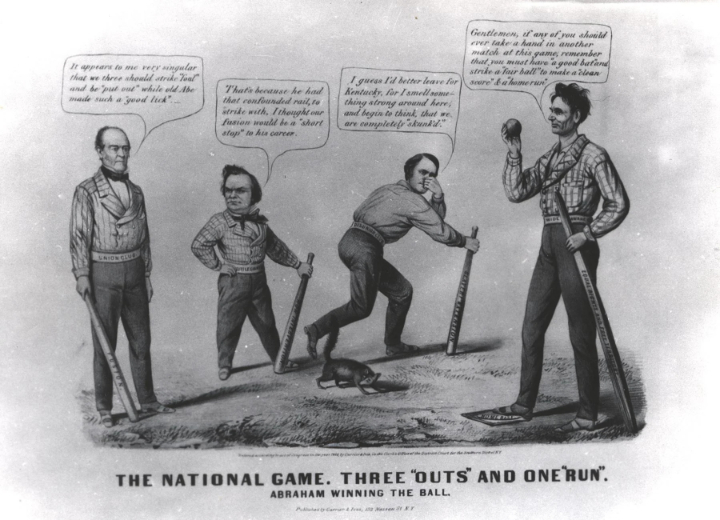
By the time of the Civil War, baseball (or base ball, as it was written at that time) had become a leisure-time obsession, particularly in northeastern cities such as New York. For example, even with the Civil War in progress and the Army of the Potomac closing in on the Confederate capital of Richmond, a June 7, 1862 game in Brooklyn between a team from Philadelphia and a team composed of players from the best teams in Brooklyn drew what The New York Times called “by far the largest assemblage which has gathered upon any base ball ground during this season.” In addition, a Currier & Ives political cartoon for the 1860 presidential election, which is titled The National Game, Three “Outs” and One “Run,” uses a baseball analogy to describe the four candidates. All four are holding bats with words written on them. John Bell’s bat is labeled “fusion” to signify his platform’s attempt to unite both pro-slavery and anti-slavery voters. John C. Breckinridge’s bat is labeled “slavery extension,” while Stephen A. Douglas’ bat is labeled “non intervention.” Abraham Lincoln’s bat, which is actually a wooden rail for the candidate known as the railsplitter, is labeled “equal rights and free territory.” Moreover, Lincoln is holding the ball and has his foot on home plate to indicate the pro-Lincoln stance of the cartoon. This cartoon is evidence of how significant baseball had become in the U.S. at that time. In fact, baseball’s immense popularity in the 19th century led to it gaining the lofty title of the “national pastime.”
During the years prior to the Civil War, the game of baseball evolved from an amalgam of similar but disparate variations to a game with codified rules. Initially baseball was played under different sets of rules in different cities, but in 1845, Alexander Joy Cartwright wrote the first set of rules for the game. After that, modifications to the rules were made at various times, including at the seminal Base Ball Convention of 1857 in New York City, to which a number of teams sent delegates. At this convention, important rules were established. Among these, the length of games was set at nine innings (rather than the previous rule stipulating that games ended when one team scored 21 runs), the number of players per team was set at nine, and the distance between bases was set at 30 yards (90 feet). All of these rules are still in effect today.
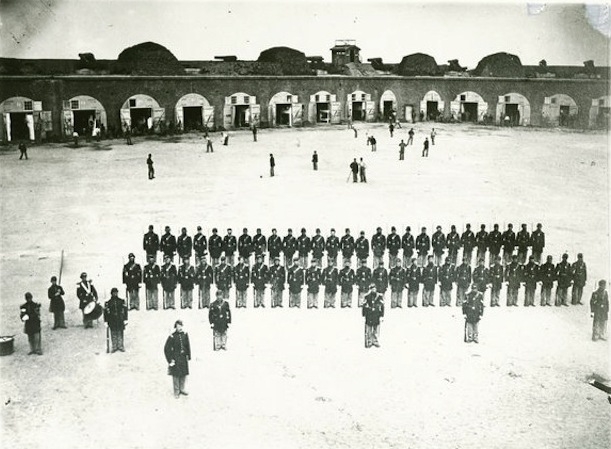
Baseball had become such a prominent part of American society by the time of the Civil War that soldiers on both sides played it during the times when they were free from their duty of trying to kill each other. On a summer day during this horrific war, William Cummings watched clam shells that he hurled curve through the air and was inspired to try to make a thrown baseball follow a similar path.
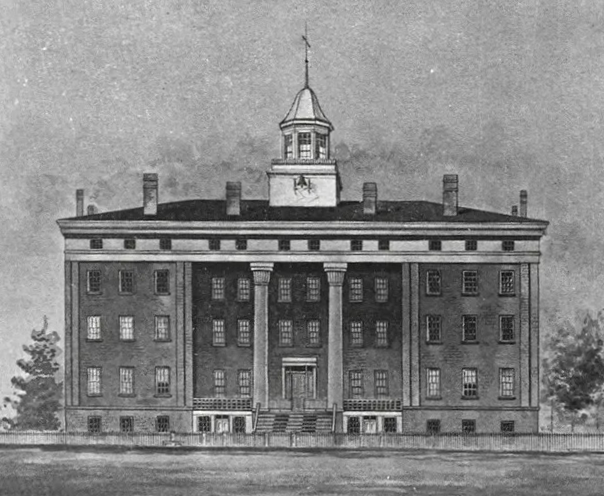
Cummings spent the next four years developing his curving pitch. For part of that time, he was a student at a boarding school named Falley Seminary in Fulton, New York. As Cummings told of it, “In 1864 I went to Fulton, New York, to a boarding school, and remained there a year and a half. All that time I kept experimenting with my curved ball.” Cummings’ 18 months at Falley Seminary coincided with the grueling period during the second half of the Civil War when the Confederacy’s armies were inexorably ground down. According to a 1912 article in the Syracuse Journal, Cummings used his curveball in baseball games while he attended Falley Seminary. The pitch’s effectiveness is clear from that article, which states, “Cummings could make the ball talk, and could get control of his sailing ball.” Doug Allison, Cummings’ catcher, “would throw up both hands and say: ‘It’s all over; they can’t hit you with an oar.'”
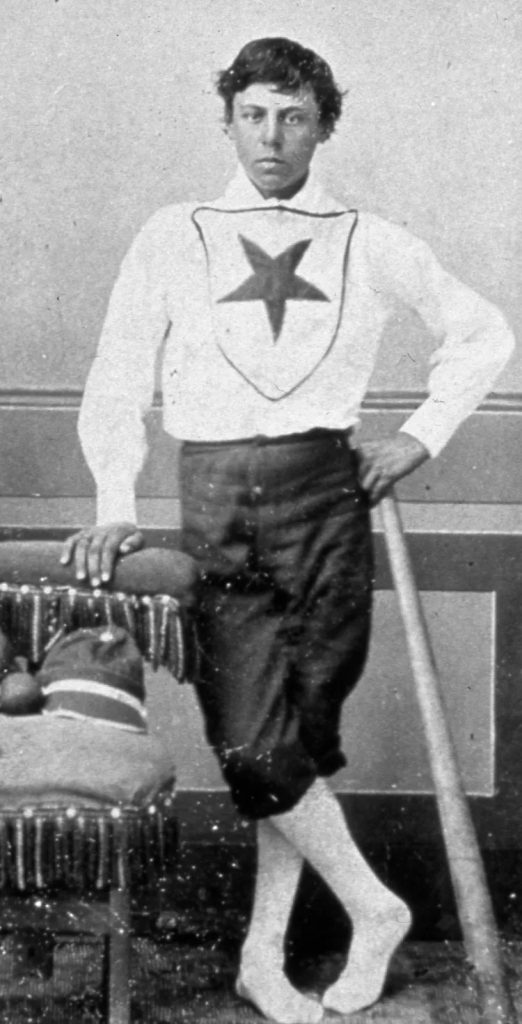
After leaving Falley Seminary, Cummings joined a junior amateur team in Brooklyn, where he excelled as a pitcher to such a degree that he was nicknamed “Candy,” which was a 19th-century sobriquet that was given to someone who was extremely skilled at his craft. Cummings’ success with that team led to him being invited to join the Brooklyn Excelsiors in 1865. This was a major step for the young pitcher, because the Excelsiors were one of the premier amateur teams of that time, which meant that Cummings would be facing exceptional competition. Cummings proved equal to the task, as evidenced by the fact that the following year, Cummings received high praise from Henry Chadwick, one of the preeminent baseball writers of the second half of the 19th century and a member of the National Baseball Hall of Fame.
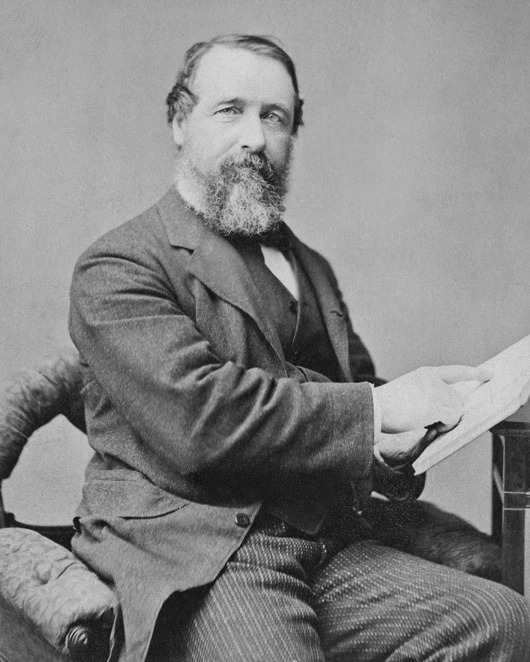
Chadwick was born in England and moved to the U.S., where he became the cricket reporter for The New York Times. But Chadwick came to be enamored with baseball because, as he wrote, “In baseball all is lightning; every action is as swift as a seabird’s flight,” which is a description of baseball that contrasts sharply with the opinion of many of today’s sports fans that the game is too slow-paced. Chadwick, who transitioned from a cricket reporter to a baseball reporter, wrote of Cummings after one of Excelsior’s games, “The pitching and general play of young Cummings in this match marks him as a future Excelsior player of note.” Interestingly, when Chadwick penned those laudatory words about Cummings, it was not merely a baseball reporter giving praise to a baseball player; it was a baseball inventor giving praise to another baseball inventor. Just as Cummings contributed the curveball to baseball, Chadwick invented the box score, and Chadwick is recognized for this by the Hall of Fame.
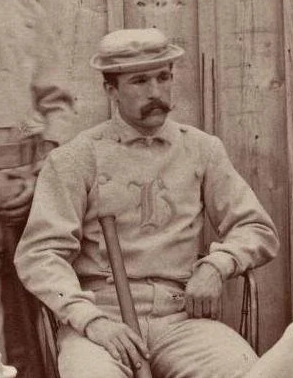
Despite Cummings’ initial success at this higher level, his sternest test was yet to come. It arrived on October 7, 1867, 11 days before Cummings’ 19th birthday, in the form of a batter who had, in Cummings’ words, “prowess with the bat.” Cummings was pitching for his Brooklyn Excelsiors team in a game against Harvard’s baseball team. At a pivotal point in the game, a player named Archibald Bush stepped to the plate for his turn at bat. Bush, the Harvard team’s catcher, was a prodigious and fearsome hitter. However, before he became a 19th-century baseball slugger, Bush served in the Union army as a lieutenant in the 95th New York Volunteer Infantry. That regiment was eventually assigned to the Army of the Potomac and spent part of its time in the I Corps, including at Gettysburg, where the I Corps was under the command of John Reynolds until Reynolds met his untimely end early in the battle. The 95th New York was in all of the major battles in the Eastern Theater from the Second Battle of Bull Run to the Battle of Appomattox Court House, and Bush was with the regiment for much of it, having enlisted in October 1863 at the age of 17 and being discharged in March 1865. Now, a little more than two and a half years later, Bush was serving in a different unit, a unit that met its foes not on a battlefield, but on a diamond-shaped field and in a far less hazardous activity.
For Bush’s adversary in the baseball duel on that early October day, this was the pinnacle of four years of experimenting. This was not standing on a beach throwing clam shells and making them curve. This was the real thing. This was “Candy” Cummings standing in the pitcher’s box on a baseball field, facing one of the best batters in baseball, and putting his curveball into use in one of the most difficult situations possible. This would be the test of Cummings’ curveball that would tell him just how powerful a weapon it was. Many years later, Cummings related what happened when the time came for him to present his brainchild to his formidable opponent: “When he struck at the ball it seemed to go about a foot beyond the end of his stick.” In other words, Cummings’ pitch curved so far beyond the reach of Bush’s bat that Bush did not come close to hitting it when he swung at it and missed. Cummings continued, “I tried again with the same result, and then I realized that I had succeeded at last.”
Cummings was ecstatic. “A surge of joy flooded over me that I shall never forget…I said not a word, and saw many a batter at that game throw down his stick in disgust. Every time I was successful I could scarcely keep from dancing with pure joy.” But just like Robert E. Lee and his Army of Northern Virginia at Gettysburg in the summer when Cummings first thought about throwing a curveball, Cummings and his curveball proved not to be invincible. The Excelsiors lost on that day by a score of 18 to 6, and Cummings learned a hard lesson about his curveball. “I could not make it curve when I wanted to…With a wind against me I could get all kinds of a curve, but…the ball was apt not to break until it was past the batter.” It must be remembered that Cummings had to deal with different pitching rules when throwing his curveball. At that time, pitchers were required to throw underhand, so Cummings had to put spin on the baseball with a throwing motion that made it more difficult to do so. In fact, the pitcher’s role at that time was simply to initiate the action, to deliver the ball to the batter without trickery and in a way to best allow the batter to hit it, hence the name “pitcher.” The pitcher did not throw the baseball, but pitched it, like a gentleman.
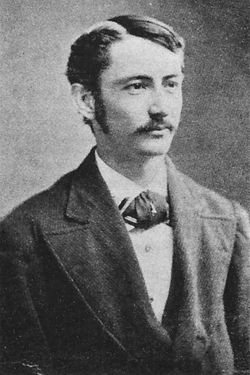
An underhand pitching motion made it impossible for Cummings to snap his wrist in the same way that today’s pitchers do, and it would not be until 1885, several years after Cummings retired from playing baseball, that pitchers were permitted to throw overhand. But Cummings continued to work on his grip and his delivery, “holding the ball in many different ways and throwing with a variety of motions,” although “many of the ways in which I held or threw the ball were useless.” Eventually Cummings developed a grip, wrist snap, and motion that made it possible for him to consistently throw his curveball. Nevertheless, another aspect of the pitching rules made Cummings’ task even more challenging, because pitchers of his time were, technically, not allowed to snap their wrist when they delivered the baseball to the batter. Fortunately for Cummings and his curveball, this rule was not stringently enforced, and Cummings admitted that he twisted his wrist illegally when he threw a curveball, although this twist was virtually undetectable to the game’s lone umpire.
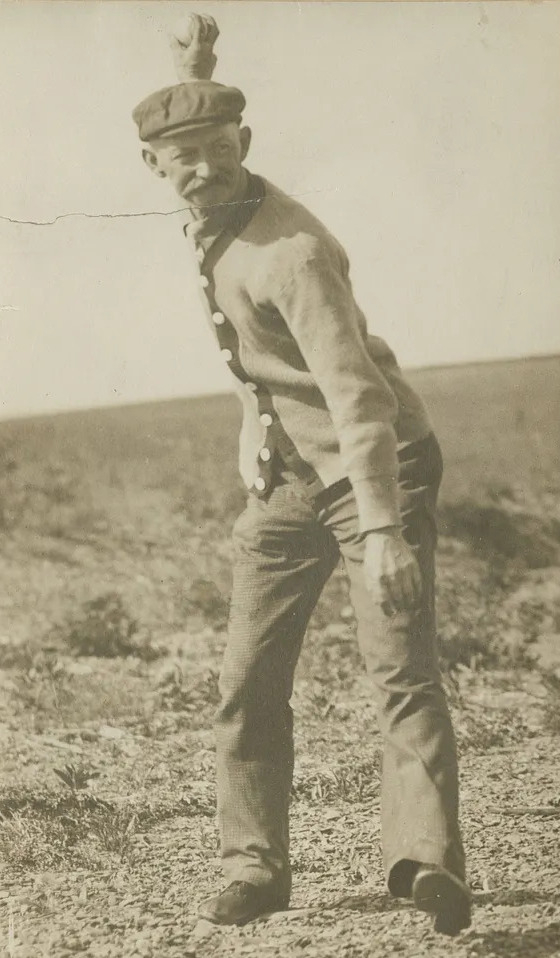
Cummings continued to refine his delivery and perfect his curveball while playing on amateur teams for the next few years. During this time, he became an outstanding pitcher. In 1872 Cummings began his professional career in the National Association of Professional Base Ball Players, where he played for four years and won 124 games. Following that, he played for two years in the National League. He pitched sporadically after that, but his baseball career essentially ended after his second year in the National League, where he had less success, although he did make history in 1876 (his first year in the National League) by becoming the first pitcher with two complete game victories on the same day. Because the percentage of complete games in Major League Baseball has decreased from over 50% in the early 1900s to less than 1% in 2024, this accomplishment by Cummings demonstrates the kind of pitching capability not to be found nowadays at the game’s highest level.
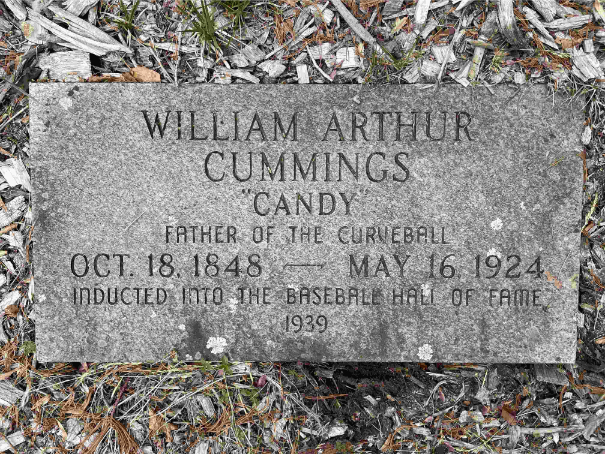
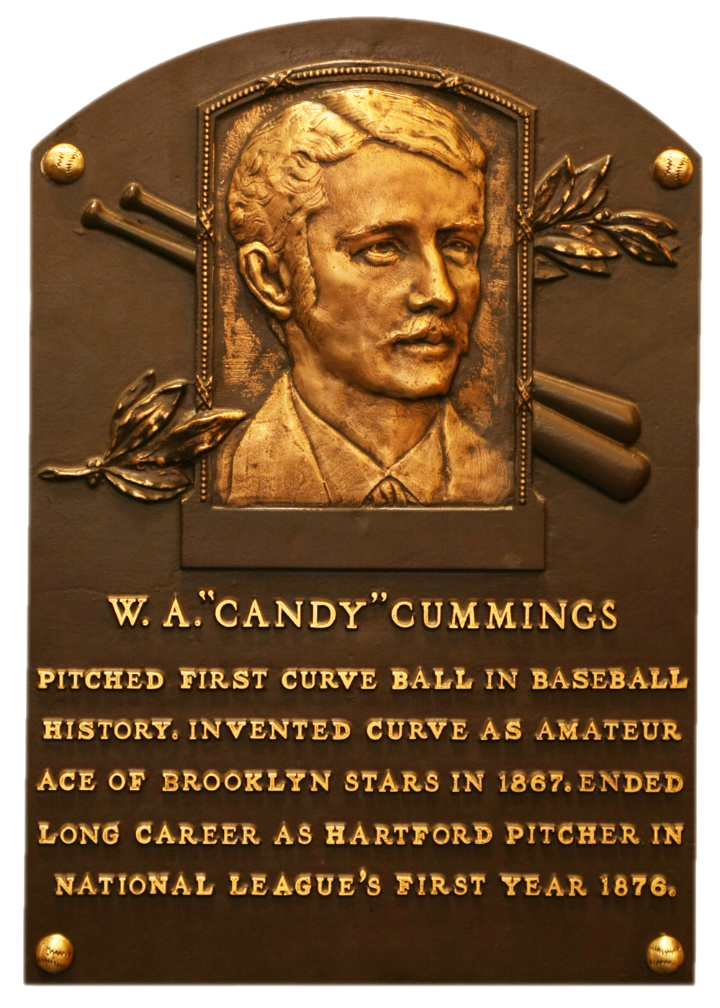
William “Candy” Cummings died on May 16, 1924 in Toledo, Ohio and is interred in his birthplace of Ware, Massachusetts. Since that day, Cummings presumably has been throwing curveballs past the flailing bats of spectral participants in the afterlife’s chapter of the national pastime. Cummings was inducted into the National Baseball Hall of Fame in 1939, and his plaque in the Hall of Fame recognizes him as the inventor of the curveball. Others claim to have invented the curveball, but the National Baseball Hall of Fame recognizes none of these other claimants and recognizes only William Cummings as the inventor of this pitch. Late in his life, Cummings mused about the pitch he invented, “But my idlest dreams of what a curved ball would do, as I dreamed of them that afternoon while throwing clam shells, have been filled more than a hundred times. At that time I thought of it only as a good way to fool the boys, its real practical significance never entering my mind. I get a great deal of pleasure now in my old age out of going to games and watching the curves, thinking that it was through my blind efforts that all this was made possible.”
Making a pitched baseball deviate from a straight trajectory has become as much an ingrained part of the game of baseball as the bats and gloves that are the standard implements of the game’s players. Without this weapon, a pitcher’s arsenal would be as much reduced as that of a Civil War soldier who was issued a smoothbore flintlock musket instead of a Springfield rifle. But on a summer day in 1863, while hundreds of thousands of men were far from home engaged in one of our country’s deadliest experiences, William Cummings was inspired by the flight of thrown clam shells to develop a way to alter the course of a pitched baseball. Cummings’ invention went on to become an integral part of baseball, and this happened for one simple reason. Cummings’ invention truly was a game-changer.

Sources
A number of sources were used for this article. The most useful sources are as follows.
The Story of Baseball’s First Curveball by Michael Imhoff; SB Nation
Pioneers: Candy Cummings by John Thorn; MLB Blogs
How I Pitched the First Curve by John Thorn; MLB Blogs
About Candy Cummings; National Baseball Hall of Fame
October 7, 1867: Candy Cummings Debuts the Curve by Mark Pestana; Society for American Baseball Research
Candy Cummings; Wikipedia
Candy Cummings; Baseball Reference
William Arthur “Candy” Cummings; Find a Grave
Evolution of 19th Century Baseball Rules by Eric Miklich; 19c Base Ball
The Making of Baseball’s Magna Carta by John Thorn; MLB Blogs
Knickerbocker Rules by Alexander J. Cartwright; Baseball Almanac
June 8, 1885: Presto Change! Cannonball Morris Dominates after Overhand Pitching Is Suddenly Legalized by Larry DeFillipo; Society for American Baseball Research
Archie Bush: Amateur Era Superstar by John Thorn; MLB Blogs
95th New York Infantry Regiment; Wikipedia
Baseball Came of Age during American Civil War by Steve Light; National Baseball of Fame
Baseball and the Civil War by Zachary Brown; U.S. History Scene
About Henry Chadwick; National Baseball Hall of Fame
Why Do Curveballs Curve? Let’s Talk Science
Spin Rate; Major League Baseball
The National Pastime by John Thorn; MLB Blogs
The First Modern War; The Chicago Historical Society
Complete Game; Wikipedia