
By Brian D. Kowell
The Cleveland Civil War Roundtable
Copyright © 2026, All Rights Reserved
Editor’s note: This article was originally published in The Charger in January 2026.
Edwin Cole Bearss was born on June 26, 1923 in Billings, Montana. His parents were Omar Effinger Bearss (1896-1981) and Virginia Louise Morse Bearss (1901-1964). He had one younger brother, Robert (Pat) Bearss. Ed was raised on a 10,000-acre cattle ranch that was 90 miles west of Billings and was named the E bar S. He grew up with kerosene lamps and horse-drawn plows. Ed and his brother Pat worked on the ranch when not attending school. Their first school, a one-room schoolhouse, Sarpy School, was six miles away, and sometimes the boys rode together on horseback to and from the school.
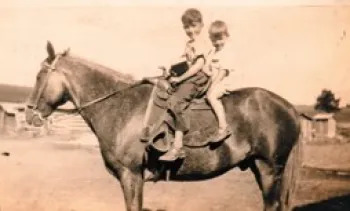
In the winter months, Ed’s father, who had served in the Marine Corps in Haiti and Europe during World War I, sometimes read to the boys about history and the Civil War. Ed had an affinity for the Civil War and named the cattle on the ranch after Civil War battles and generals. When the family went into Billings, Ed remembered listening to stories from the town’s Civil War veteran, “Grandpa Henderson [who] used to sit around in the [town’s] hotel lobby with his reunion ribbons on.” Ed also heard stories about his elder cousin, “Hiking Hiram” Bearss (1875-1938), a Marine who was given the Congressional Medal of Honor for heroism in combat in the Philippines in 1901 and the Distinguished Service Cross in World War I. In 1937, Ed went away to St. John’s Military Academy in Delafield, Wisconsin. He later returned to attend Hardin High School in Billings.
In December 1941, the Bearss family was sitting fireside listening to the radio. They were listening to the broadcast of a football game between the Chicago Bears and the then-Chicago Cardinals when an announcer interrupted the broadcast with news that the Japanese had bombed Pearl Harbor. The family, at first, could not believe the news. When the enormity of the Japanese attack was realized and President Franklin D. Roosevelt announced that “It was a day of infamy,” Ed said that he became determined to “join the Marines and get back at those Japs.”
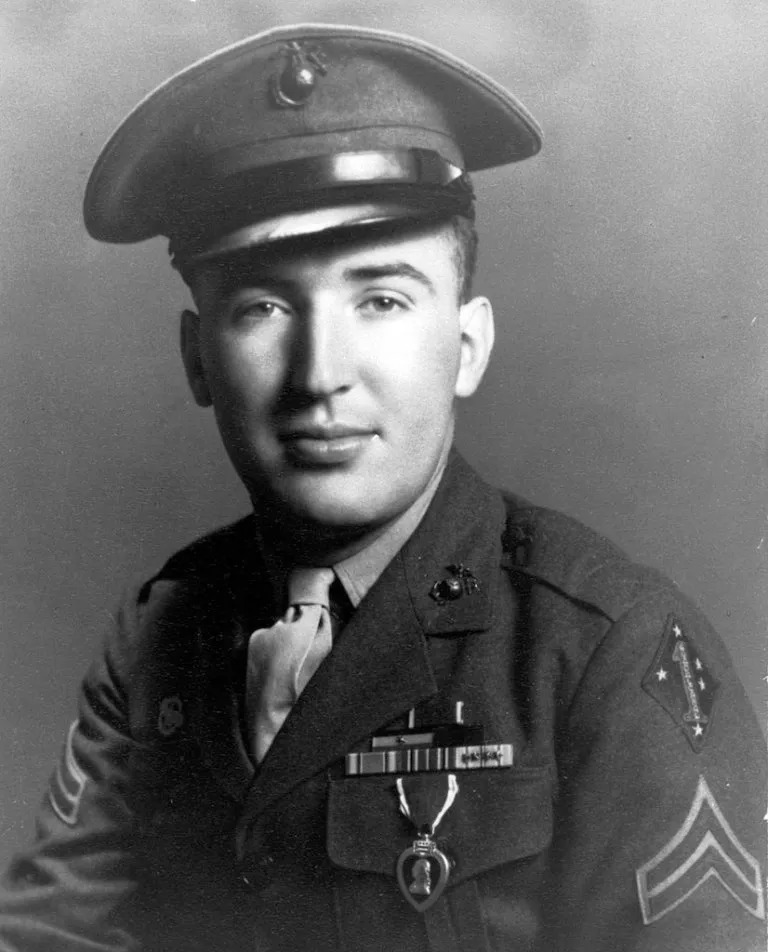
After graduating from Hardin High School, Ed took the summer off to hitchhike across the United States to visit battlefields. When he returned to Montana, he enlisted in the Marines in April 1942. His basic training was at a Marine base in San Diego, California. He was in the 22nd Marine Regiment. “I had wanted to be a [Marine] Raider since I heard of them in boot camp,” Ed said, “and I wanted out of the chicken-shit Twenty-second.”
The gung-ho 19-year-old interviewed for the Raider Battalion. During the interview he was asked, “How far can you walk? How far can you swim? Could you kill a man with a knife or strangle him?” He soon found himself a member of the Raider Battalion and after training was sent to the Pacific Theater. Unfortunately, Ed came down with a bad bout of malaria and was left behind in the hospital when the Battalion was deployed. When he recovered, he was reassigned to the 7th Regiment in the 1st Marine Division and sent to New Guinea.
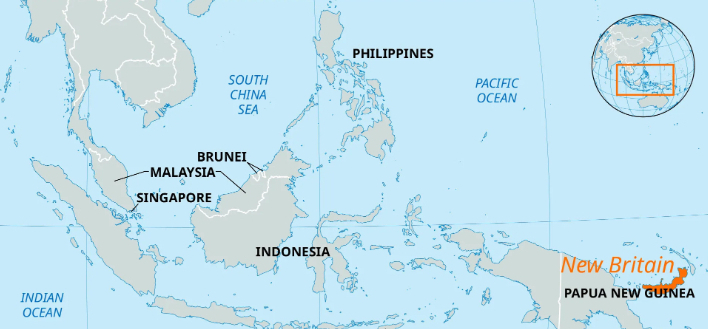
On Christmas night of 1943, after a meal of steak and eggs, Ed boarded a Higgins boat with his regiment and traveled from New Guinea to the Japanese-held island of New Britain where they were to land. The landing was part of General Douglas MacArthur’s Operation Cartwheel to capture the island and the Japanese fortress of Rabaul. Ed and his fellow Marines splashed ashore at Cape Gloucester and almost immediately engaged the enemy in combat. The Marines slowly seized ground at the point of the bayonet and once a toe-hold was achieved, quickly dug in. The Japanese, determined to drive them into the sea, launched a series of counterattacks which proved unsuccessful, afterward retreating into the jungled interior.
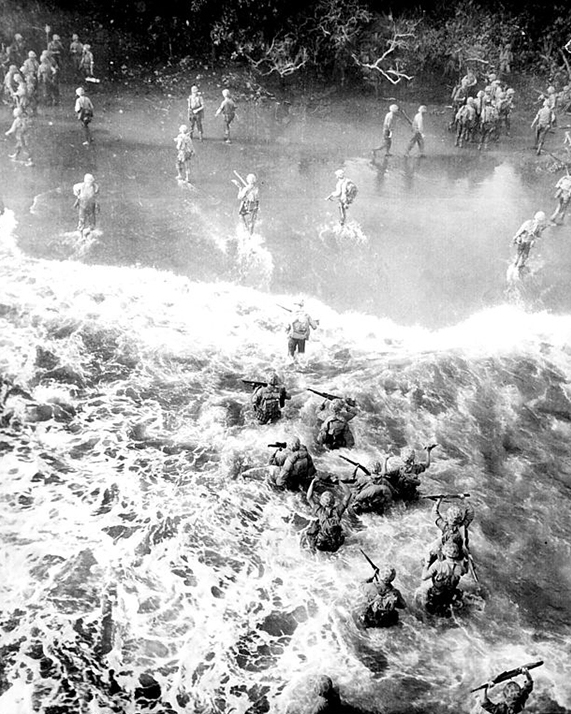
On January 2, 1944, Ed took the point of his platoon and led them deep into the jungle. Every man in the platoon was ready for combat except for one. That soldier was left behind to guard the camp because, as Ed recorded, “He was yellow.” Ed later recalled that that “yellow” marine was the only member of Ed’s platoon to make it through the day without being killed or wounded.
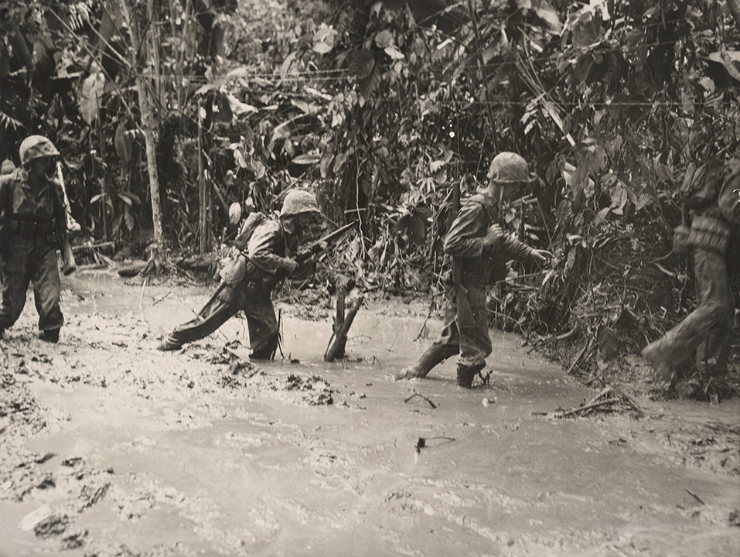
“After pushing about half a mile through the dense jungle,” Ed remembered, “we approached a stream perpendicular to our line of march and began to cross. On the other side, I saw men, not ours, about 30 to 35 yards away. They were not wearing helmets. So, I opened fire with my rifle. Other firing opened to our left and right, then all hell broke loose. A nest of Japanese machine guns dug into pill boxes on the opposite bank opened on us. The man next to me was shot through both hands and wrists. Screaming ‘I’m ruined for life!’ he took off running. Another Marine coming up was hit and others were falling. All of this happened faster than I can talk.
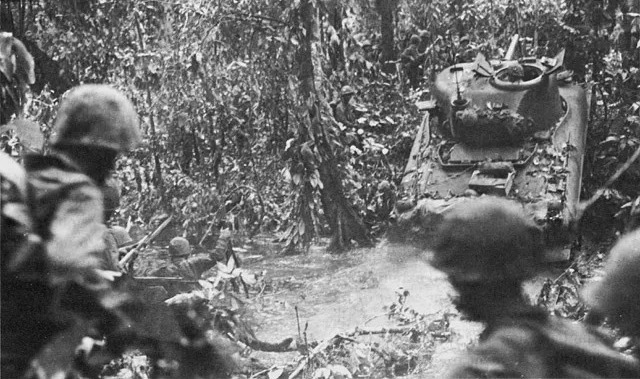
“I was on my knees when the first bullet struck. It hit me in my left arm, just below the elbow, and the arm went numb. It felt like being hit with a sledgehammer. It jerked me sideways and then I was hit again, another sledgehammer blow to my right shoulder. I fell, both arms shattered, and my helmet slipped down over my eyes. I couldn’t see. But there were now dead men lying all around me.” Ed later mused that he had probably been hit by an older-model Japanese Type 96 machine gun. Had it been the newer Type 99, he was certain that the second bullet would have hit him in the chest.
“It seemed a long time that I lay there, in fierce pain, pinned down by the Japanese fire…Unable to stand it any longer and afraid of bleeding to death, I decided to risk getting up; the Japanese gun just in front of me was firing off to the right. As I wiggled around, trying to rise, another bullet grazed my butt and another hit my foot. I quit moving.”
Lying out in the field, he only had time to think of survival. After a while, he decided to try again. “They [the Japanese] saw me [move] but couldn’t get their gun depressed fast enough before, without the use of either arm, I went over the lip of a knoll and slid down the other side…I still don’t know how I did it. If that ground had been level, I would be dead. I realized then how important terrain was in battle.” Lieutenant Thomas J. O’Leary and a U.S. Navy corpsman named Hartman crawled over to Ed and pulled him back behind the lines far enough so stretcher bearers could reach him and carry him to the battalion aid station.
After a long, grueling journey from New Britain to New Guinea and then back to Mare Island, San Diego, Ed spent months in the hospital undergoing multiple surgeries to save his arms. He was still in the hospital on VJ Day. Ed recalled that the news of the dropping of the atomic bomb on Nagasaki on August 9, 1945 “came over the radio the day after I had been to surgery and I remember how disappointed I was I couldn’t go out on the town and get drunk.” He spent 26 months in hospitals saving his arms, but with permanent nerve damage. He was decorated and honorably discharged on March 15, 1946.
The G.I. Bill benefited Ed Bearss. He went back to school and received a BS in Foreign Services from Georgetown University in 1949 and then earned an MA in History from Indiana University in 1955 with his thesis on Major General Patrick Cleburne.
Ed got a job in Washington D.C. at the Naval Hydrographic Office and with the Office of the Chief of Military History until he joined the National Park Service (NPS) in 1955. He was sent to Vicksburg National Military Park. While working at the information desk, a 32-year-old schoolteacher walked in with a question. Margie Riddle (1925-2006) of Brandon, Mississippi asked Ed about Union General William Tecumseh Sherman’s Meridian Campaign. That discussion led to the two marrying on July 30, 1958. Margie eventually became Ed’s research assistant and authored Civil War books of her own. Ed authored 25 books and numerous articles over his career. The two had three children: Edwin Cole Bearss Jr., Mary Virginia (Ginny) Bearss, and Sara Beth Bearss (1960-2012).
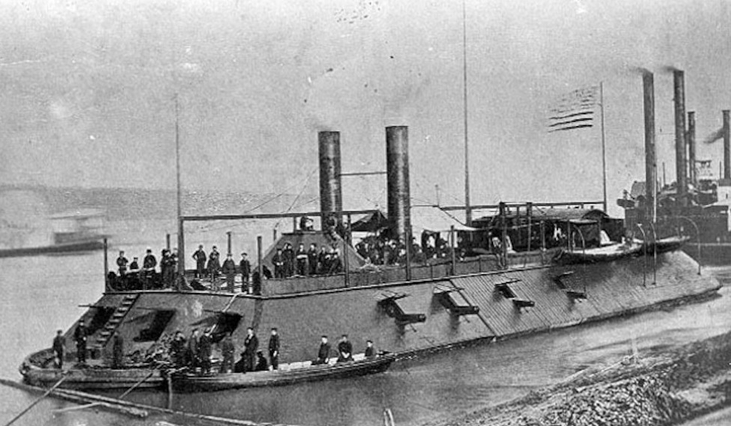
Ed spent 11 years at Vicksburg National Military Park and discovered the location of the sunken Civil War gunboat USS Cairo. Through his efforts the Cairo was raised, and what was left of it was preserved at Vicksburg. To help raise funds for the effort, Ed competed on the television show the $64,000 Challenge.
In 1966 Ed, Margie, and the kids moved to Washington, D.C., where Ed became the Research Historian for the NPS. In November 1981, he was named Chief Historian and held that position until July 1994. After that he became the NPS Director’s Special Assistant for military sites. He was very active in the preservation movement to preserve battlefields and historic sites. The saying went, “If Ed Bearss says it’s worth preserving, then it’s worth preserving.” He retired from the NPS on October 1, 1995.
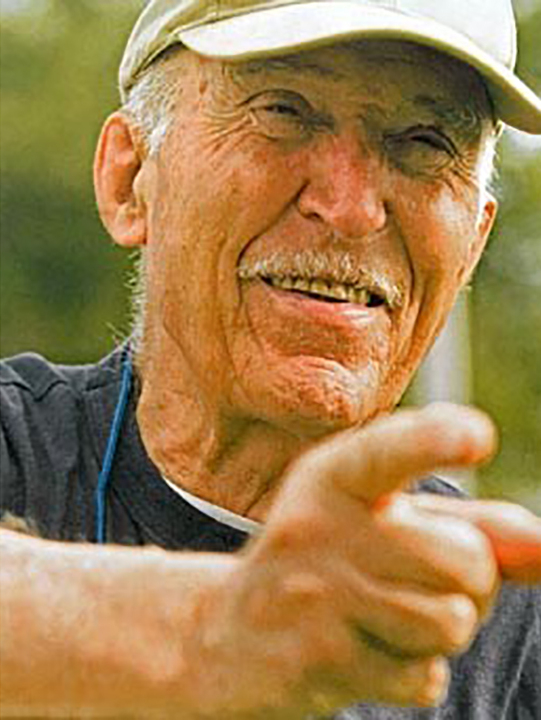
Retirement did not slow down Ed Bearss. In addition to his writing, he was frequently a guest speaker at Civil War symposiums and Civil War roundtables. Ed has frequently spoken to the Cleveland Civil War Roundtable. In fact, he spoke more times than any other speaker in our history. He gave his first talk to our group on October 23, 1962, about Vicksburg, and since then has spoken on various topics such as Brice’s Crossroads, the Battle of Shiloh, the Battle of Chickamauga, and Forrest’s and Van Dorn’s raid to disrupt Grant’s march on Vicksburg, to name only a few, and all delivered without a note. He was given an honorary, lifetime membership to the Cleveland Civil War Roundtable.
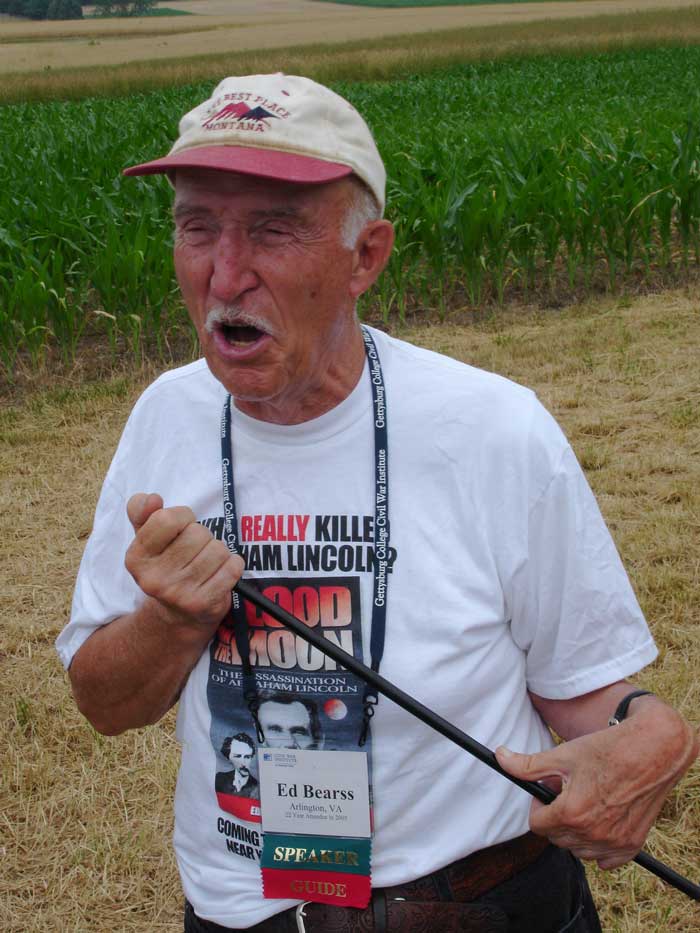
Ed was at his finest leading Civil War battlefield tours. That is where this author first met Ed Bearss. He gave us a tour of Brandy Station, Kelly’s Ford, Cedar Mountain, and Jackson’s flank march to Manassas Junction. I was blown away. I was at his side like a puppy all weekend. As one author wrote, “as Bearss talks, he marches back and forth, brandishing a silver-headed swagger stick (a gift from the Cleveland Civil War Roundtable) tucking it from time to time under his withered left arm. He keeps his eyes tightly closed while he lectures. Bearss told him, ‘That way I can see the events unfolding in front of me.'” Another wrote that “Ed Bearss has what might be best called a battlefield voice, a kind of booming growl, like an ancient way-cylinder record amplified to full volume – about the way you’d imagine William Tecumseh Sherman sounded the day he burned Atlanta, with a touch of Teddy Roosevelt charging up San Juan Hill.”
Ed was not afraid to lead a group anywhere or in any weather. On one of our early field trips to Vicksburg, Ed led a car caravan to Bruinsburg down the riverbank on a dirt road to the landing site of Grant’s army. Unfortunately, the ground was wet and cars became stuck in the mud and had to be towed out. There was also a story of Ed leading a tour group on a bus to visit Richard Garrett’s Farm near Port Royal, Virginia, where Booth was killed. The site is in the median of a divided highway, and the turnaround was so congested with trees and underbrush that the bus got stuck.
Ed Bearss was an inspiration and mentor to countless students of the Civil War. The New York Times described Ed Bearss as a “national treasure, legendary historian, and gifted storyteller.” The Washington Post said, “Ed’s glory is not in the recitation of the facts of a battle. Rather it’s the personal details of the lives of the men who fought it.” Jim Lighthizer, past president of the American Battlefield Trust, noted, “For many of us, our love of history and preservation was nurtured through battlefield tours led by Ed and his appearance on Ken Burns’ series The Civil War. His knowledge of history was encyclopedic – and his ability to convey that knowledge in a relatable way, mesmerized his audiences for generations.” Historian James M. McPherson added, “As anyone who has been on a tour with Ed is aware, he knows everything – and I literally mean everything – about the Civil War battles and a great many other areas of history as well.”
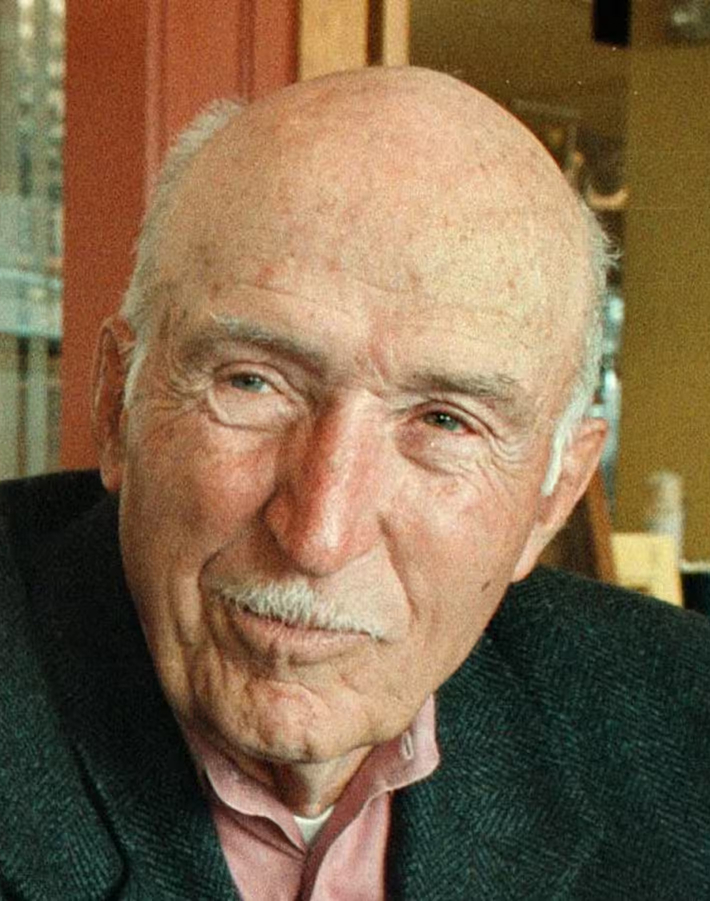
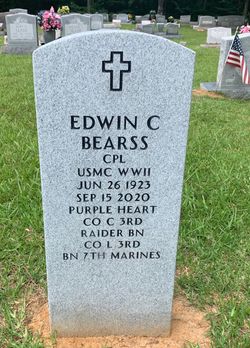
Ed received many honorary degrees and was honorarily named a Gettysburg Licensed Battlefield Guide. With advancing years, Ed finally showed signs of aging. He grew hard of hearing and there were signs of forgetfulness. With Margie’s passing and some family still in Brandon, Mississippi, Ed moved there. It was a sad, stormy day on September 15, 2020 when Ed drew his last breath with his family surrounding him. He is buried in Bethel Cemetery in Brandon, Mississippi. He is greatly missed.
Acknowledgment: The author thanks Dave Carrino for his help finding articles about Ed’s visits to our Roundtable and Mike Wells for his encouragement to write this piece.

Sources (Click on the book link below to purchase from Amazon. Part of the proceeds from any book purchased from Amazon through the CCWRT website is returned to the CCWRT to support its education and preservation programs.)
Find a Grave, Find a Grave Memorial, Edwin Cole Bearss (1923-2020).
Lengel, Ed, Semper Fi: U.S. Marine, WW II Veteran, Historian Ed Bearss, The National WWII Museum, New Orleans, September 17, 2020.
Goodheart, Adam, What Made Ed Bearss a Rock Star of Civil War History, Smithsonian Magazine, November 2005.
Waugh, John C., Edwin Cole Bearss: History’s Pied Piper, History Press, 2003.
O’Konski, Susan, R. Colonel (retired), U.S. Air Force, History’s Storyteller: The Life of WW II Marine Ed Bearss, World War 2 History – Short Stories, The Stories of WW2, February 25, 2020.
Christ, Mark K., Edwin Cole (Ed) Bearss (1923-2020): An Appreciation, The Arkansas Historical Quarterly, Vol. 179, no. 4, Winter 2020, pp. 366-369.
Wheeler, Linda, Storied Guide Leads Brigade to War Sites, Washington Post, June 14, 2003.
Editors of Emerging Civil War, In Memoriam: Ed Bearss, Emerging Civil War, September 16, 2020.