
Chattahoochee River to the Battle of Peachtree Creek
By Daniel J. Ursu, Roundtable Historian
The Cleveland Civil War Roundtable
Copyright © 2025-2026, All Rights Reserved
Editor’s note: This article was the history brief for the March 2026 meeting of the Cleveland Civil War Roundtable.
Part 3 of this series (the February 2026 history brief) covered the previous phase of Union General William Sherman’s Atlanta Campaign in the wake of General Ulysses Grant’s letter of April 4, 1864, which directed Sherman regarding the rebel Army of Tennessee: “to break it up, and to get into the interior of the enemy’s country as far as you can, inflicting all the damage you can against their war resources.” Part 3 specifically covered Sherman’s advance against General Joseph Johnston’s retreating Army of Tennessee from Kennesaw Mountain to the Chattahoochee River. A formidable defensive general, Johnston throughout the campaign selected excellent defensive positions. But now, the Chattahoochee River was the last natural defensive position only a few miles north of Atlanta itself. As they say, Johnston “had his back up against the wall.”
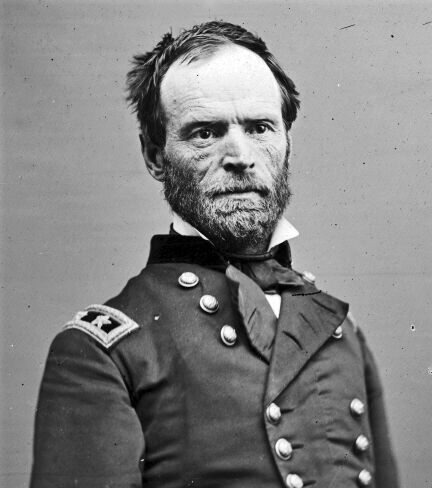
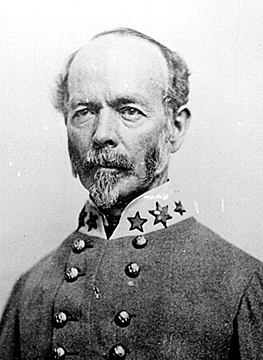
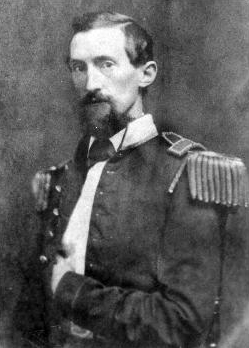
However, Johnston was prepared and previously ordered fortifications to be built at the Chattahoochee. General Francis Shoup was Johnston’s chief engineer, and he had constructed an excellent defensive line northwest of and along that river near the Western and Atlantic Railroad bridge. Of all the excellent defensive lines Johnston had utilized during the campaign, this was perhaps the best of them all. This fortified line contained 36 log-and-earth forts named after General Shoup and dubbed “Shoupades.” The Shoupades, which were 60 to 175 yards apart, were connected by eight-foot-high log palisades which had artillery-firing redans interspersed along the line’s six-mile length. Each Shoupade fort was shaped like a triangle with its vertex pointed north toward the advancing enemy. The 15-foot-high outer double walls were built with horizontally laid logs such that the external and internal components of the double walls were a few feet apart, and dirt was packed 10 to 12 feet high between them. Inside of the outer double walls, there were infantry-firing platforms built with another and shorter wall of logs, with the space between this shorter wall and the outer wall filled with dirt to create a platform that was sufficiently shorter than the outer wall to allow men to be protected by the outer wall and to fire over it while they were standing on the platform. The angled front allowed men to fire in both directions. General Shoup had planned the Shoupades to give enfilade fire all along the line.
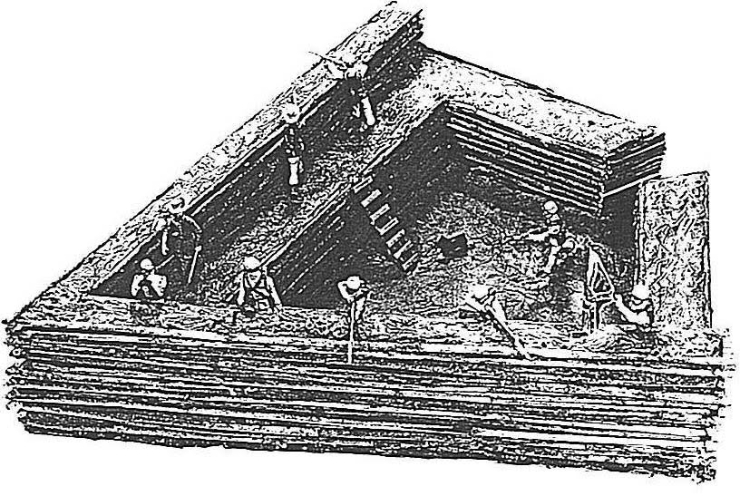
General Sherman in his Memoirs stated, “I confess I had not learned beforehand of the existence of this strong place…which proved one of the strongest pieces of field-fortifications I ever saw. We closed up against it, and were promptly met by a heavy and severe fire.” Although the line was robust, Johnston did not have enough troops to cover it along with the other numerous potential crossing sites. Sherman realized this, and out of respect for the strength of the Shoupades, he decided to avoid a head-on assault to capture the railroad bridge and opted instead to cross the river away from the Shoupades and thereby outflank Johnston.
On July 6, in a dispatch to General Henry Halleck in Washington, Sherman wrote, “I propose to study the crossings of the Chattahoochee, and, when all is ready, to move quickly…I have already shifted Schofield to a point in our left rear, whence he can in a single move reach the Chattahoochee at a point above the railroad-bridge, where there is a ford. At present the waters are turbid and swollen from recent rains; but if the present hot weather lasts, the water will run down very fast.” In the same communique, Sherman revealed his further plans: “Instead of attacking Atlanta direct, or any of its forts, I propose to make a circuit, destroying all its railroads…Our army is in good condition and full of confidence; but the weather is intensely hot.” With that in mind, Sherman ordered John Schofield to cross the Chattahoochee on July 9, and two corps quickly made it over. When Johnston learned of this, he rapidly fell back to new positions south of Peachtree Creek.
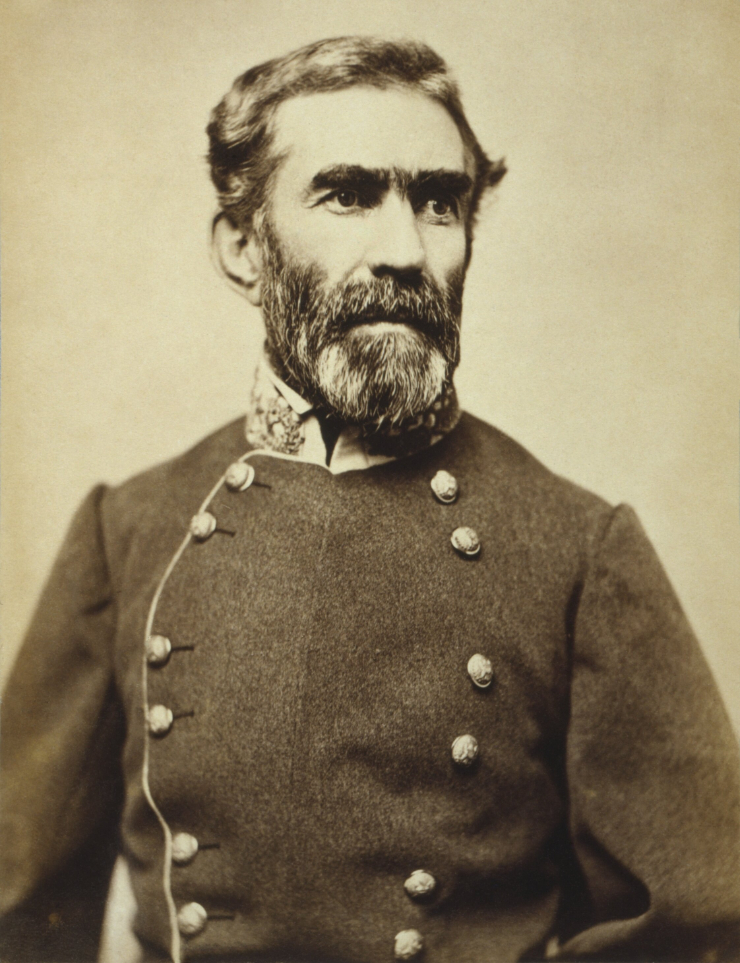
In the Confederate capital of Richmond, Virginia, President Jefferson Davis was bitterly disappointed, having watched nearly two and a half months of retreat. General Braxton Bragg, the previous commander of the Army of Tennessee, was at that time serving as military adviser to Davis. Although Davis had removed Bragg to install Johnston, Davis and Bragg still nurtured a mutual respect and friendship. To gain a better understanding of the situation, Davis sent Bragg to Atlanta despite Bragg’s poor reputation in many quarters.
In his book, Braxton Bragg: the Most Hated Man of the Confederacy, author Earl J. Hess states, “Bragg’s arrival at army headquarters early on July 13 attracted much attention…Everyone wondered at the significance of the visit…Bragg sent a telegram to Davis…he reported the Army of Tennessee was sadly depleted and had 10,000 fewer effectives…than a month before ‘I find but little encouraging.'” On July 14, Bragg quietly visited General John Bell Hood, who wrote a letter to Bragg asking that he share it with President Davis. Hood was highly critical of Johnston for failing to take advantage of opportunities to attack Sherman and exaggerated Confederate losses at 20,000 for no strategic gain. Hess further states in his book, “Bragg had his own opinion about what should be done…there is but one remedy, offensive action…Bragg did not recommend Johnston’s removal, but he told Davis that if he had to be replaced, Hood was the best choice.”
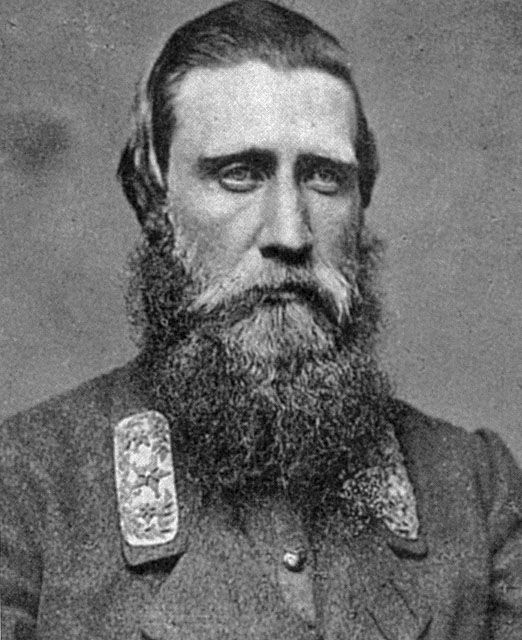
In the meantime, Davis was also consulting with others, especially General Robert E Lee. James McPherson, in his book Battle Cry of Freedom, states, “Lee advised against it on the grounds that while aggressive, Hood was too reckless. ‘All lion…none of the fox.'” Accordingly, Davis decided to give Johnston one more chance and wired him on July 16 to ask that he send his plan to defend Atlanta. Again, from McPherson’s Battle Cry of Freedom: “Johnston replied that his plan ‘must depend upon that of the enemy…We are trying to put Atlanta in condition to be held by the Georgia militias, that army movements may be free and wider.’ This hint of an intention to give up Atlanta was the final straw.” On July 17, Davis appointed Hood to replace Johnston. There was much controversy over this, but it delighted the Northern army and Sherman in particular. In his Memoirs Sherman wrote, “I inferred that the change of commanders meant ‘fight’…This was just what we wanted…to fight in open ground…instead of being forced to run up against prepared intrenchments.”
After crossing the Chattahoochee, Sherman ordered McPherson’s army on a wide arc to his left, closely followed by Schofield’s army. Sherman next commanded George Thomas’s army to cross behind Schofield, which inadvertently opened up a two-mile gap. Hood detected the opportunity to separately attack Thomas’s Army of the Cumberland. Predictably, Hood attacked only two days after taking command. He hoped to trap Thomas in a pocket between Peachtree Creek and the Chattahoochee. Hood planned to then fall upon McPherson’s army. In the meantime, he deployed his former corps in that direction, that corps now commanded by General Benjamin Cheatham.
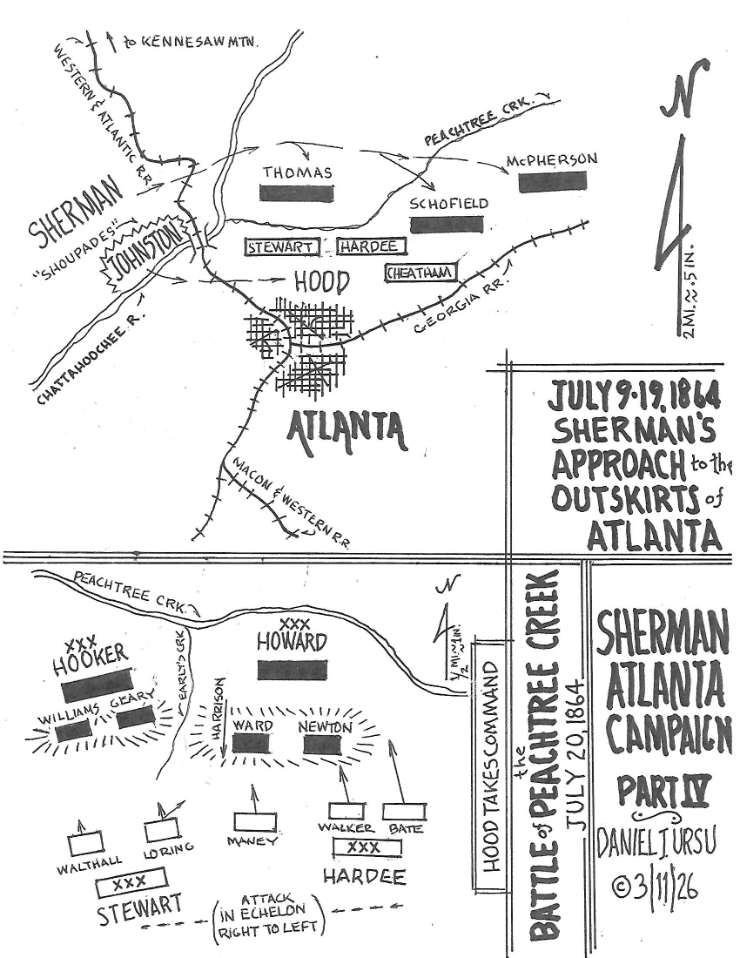
With William Hardee’s and Alexander Stewart’s corps, Hood had the five rebel divisions of Generals Edward Walthall, William Loring, George Maney (who took over Cheatham’s old division), William Walker, and William Bate against seven Union divisions of Joseph Hooker’s and Oliver Howard’s corps. These seven divisions were arrayed with the four divisions of Generals Alpheus Williams, John Geary, William Ward, and John Newton in the front line. This amounted to roughly only one to one in terms of troop strength. Hence, from the beginning it was a dubious plan when measured against the well-known military axiom of three to one odds, attacker vs. defender, to optimize the chances of success.
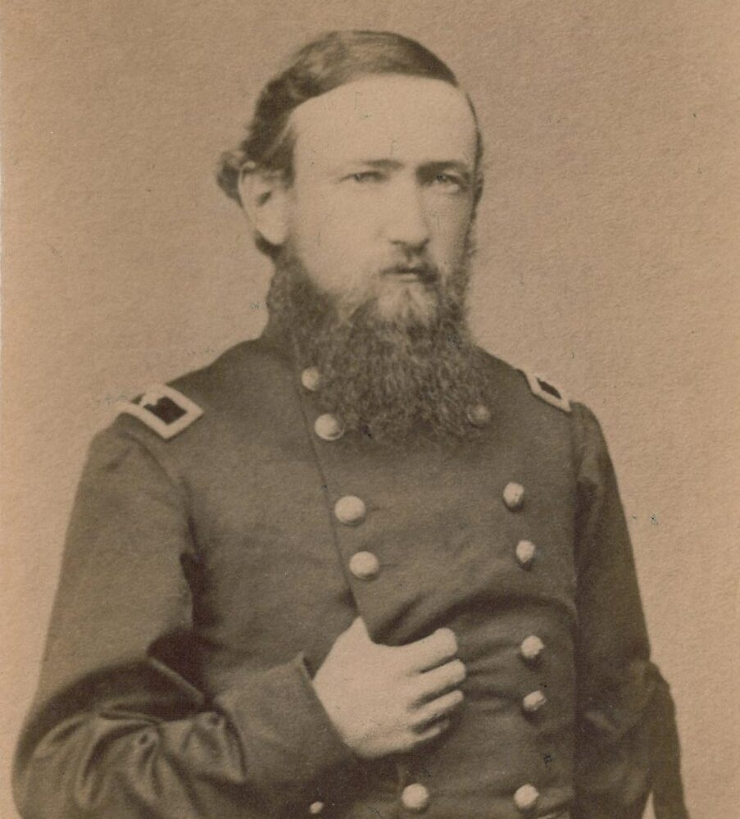
Hood ordered that the attack was to be in echelon from the Confederate right to the left. But on July 20, delays caused Bate’s division of Hardee’s corps to start at 3:00 p.m. or about three hours late. Then Bate’s division became entangled in difficult terrain, and his attack had no effect. Further, because of the late start, Thomas had detected the potential trap and advanced all of his troops into position south of Peachtree Creek along high ground. Next, Walker’s division assaulted into concentrated musket and canister fire from Newton’s division followed closely by Maney, and both of these Confederate divisions made little progress. Loring’s division made the most serious penetration against Ward’s Union division, but came under heavy fire from the brigade of the Ohioan and future president, Colonel Benjamin Harrison. Finally, Walthall’s division advanced with some success against Williams’s division and gained some portions of the Union line, but was stopped by enfilading fire and darkness. Although the Confederates attacked with fury, they were thoroughly repulsed.
By nightfall 2,500 Confederate soldiers had fallen compared to only about 1,700 for the Federals. Hood blamed the defeat on General Hardee’s late start, whom he claimed had not attacked with enough vigor. However, it is strongly arguable that the aggressive Hood bears much of the responsibility, because instead to moving to the front to control operations, he remained at his headquarters inside the city of Atlanta – which seems quite odd considering his reputation as a “fighting general.” Strange as it sounds, this would be Hood’s primary command location for the rest of the campaign in defense of the now-beleaguered city.
Part 5 continues the story of Sherman’s Atlanta Campaign by examining what the newly appointed General Hood can do to try stop General Sherman’s juggernaut.
Click on the book links on this page to purchase from Amazon. Part of the proceeds from any book purchased from Amazon through the CCWRT website is returned to the CCWRT to support its education and preservation programs.
Related links:
Sherman’s Atlanta Campaign, Part 1
Sherman’s Atlanta Campaign, Part 2
Sherman’s Atlanta Campaign, Part 3
Sherman’s Atlanta Campaign, Part 5