
By Brian D. Kowell
The Cleveland Civil War Roundtable
Copyright © 2025, All Rights Reserved
Editor’s note: This article was originally published in The Charger in October 2025.
On September 14, 1814, lawyer Francis Scott Key stood aboard a truce ship outside Baltimore Harbor and watched through the night as the British bombarded American-held Fort McHenry. As the sky lightened and he glimpsed the American flag still waving above the ramparts, the inspired Key removed a letter from his pocket and began to write verses upon the back. The finished poem was later titled “Defense of Fort McHenry” and put to music as “The Star-Spangled Banner.”1
“The Star-Spangled Banner” became a powerful symbol of the Union cause during the Civil War. While not the most popular Civil War song among Union troops, it gained special significance during the war to express the soldiers’ feelings for the flag and the ideals and values it represented. The song was used to inspire patriotism and was performed at military events and public gatherings to promote enlistments.2
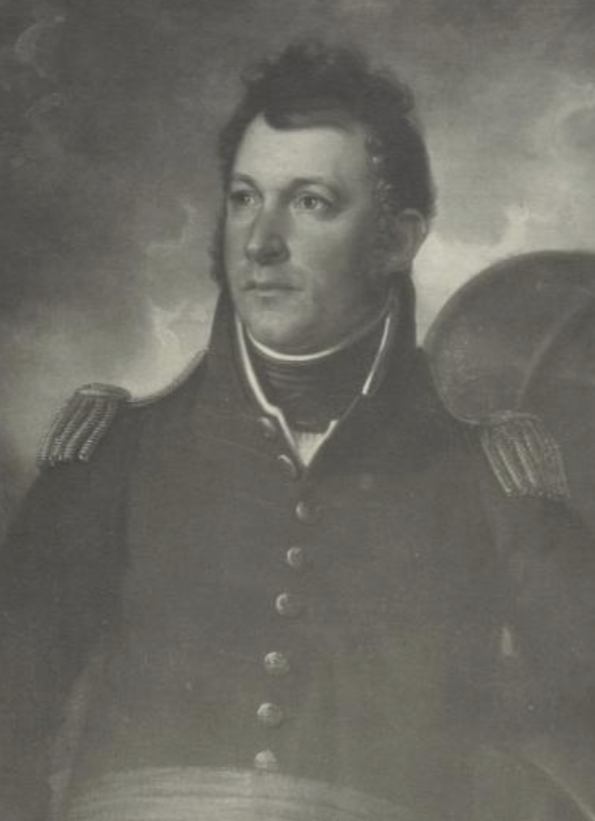
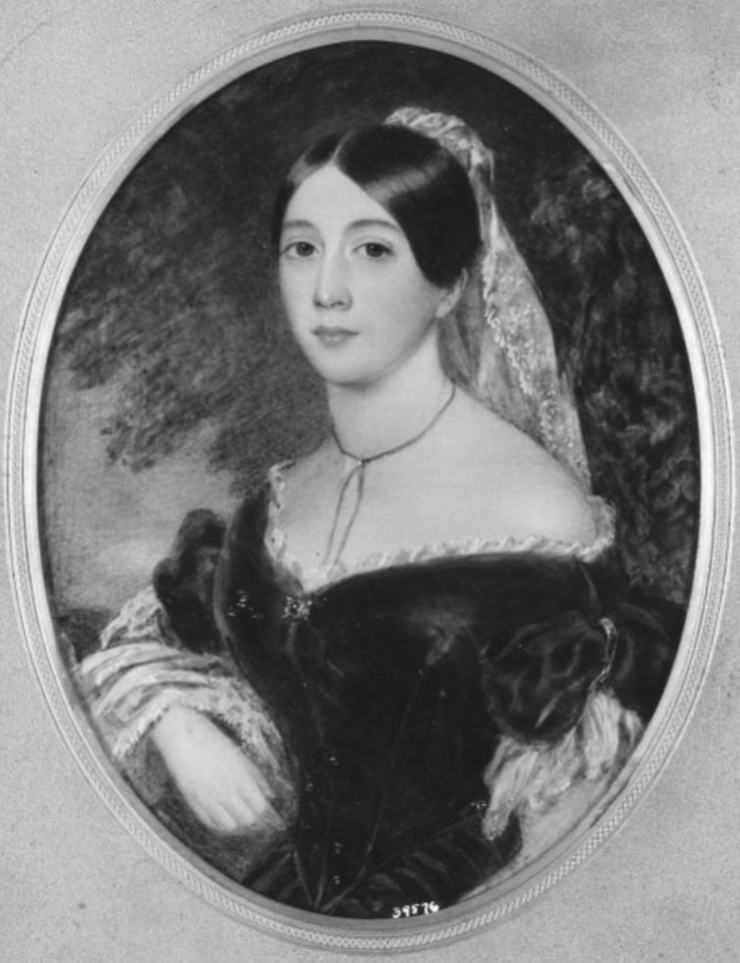
The flag that inspired the song was retained by Major (later Lieutenant Colonel) George Armistead, the commander of Fort McHenry during the bombardment. At his death in 1818, the flag went to his wife, Louisa, and then, upon the death of Louisa in 1861, to their daughter, Georgiana Armistead Appleton. When people wrote to Mrs. Appleton requesting a piece of the flag as a souvenir, she graciously complied, which left the flag in a tattered condition. The flag was inherited by her son, Eben Appleton, in 1878. He lent it to the Smithsonian Institution. Appleton eventually gifted it to the Smithsonian, which refurbished the flag and added it to their permanent collection, where it remains on public display today.3
Future Confederate General Lewis A. Armistead was the nephew of George Armistead. Born in North Carolina, Lewis moved with his family to Upperville, Virginia in Fauquier County where he grew up. With his father and three uncles, all veterans of the War of 1812, Lewis easily received an appointment to the United States Military Academy at West Point. Due to academic difficulties and poor conduct (supposedly breaking a plate over the head of fellow cadet Jubal A. Early in the mess hall), Lewis resigned from the academy.4
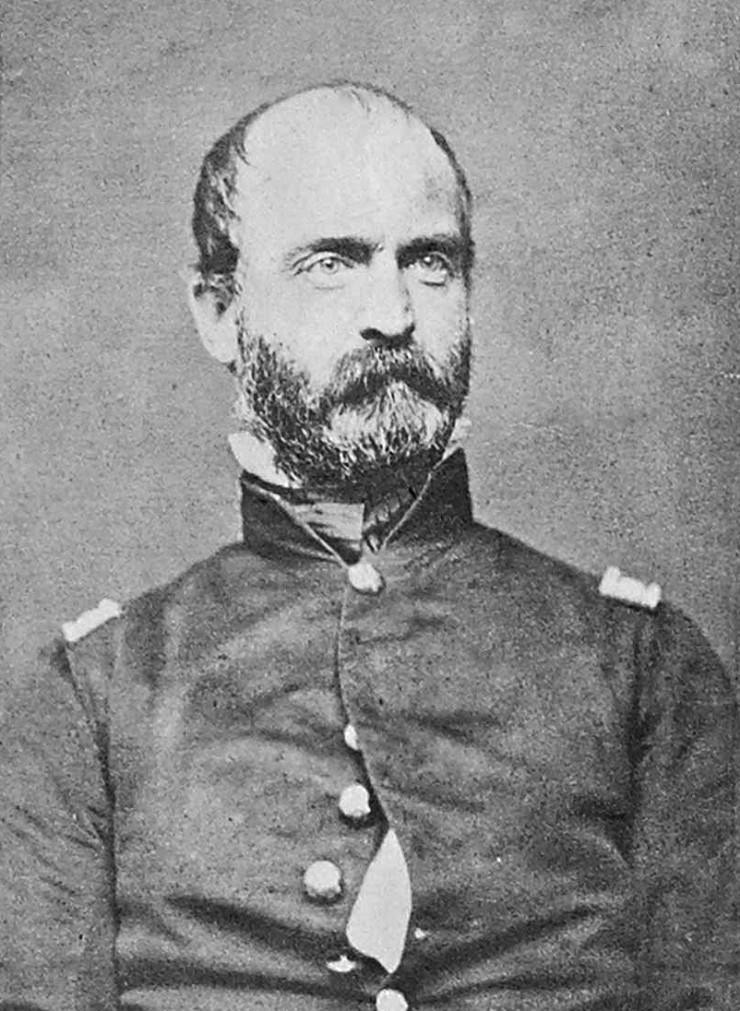
Through the fame of his family and political connections, Lewis Armistead was commissioned a 2nd Lieutenant in the 6th U.S. Infantry and served in the West, and he was decorated for bravery in the Mexican-American War. Married twice and widowed twice, he was known as “Lo” to his friends, which was short for Lothario. This nickname was “a joke on the shy, quiet-spoken widower who was known to admire the ladies.”5
In 1860, Armistead, now a 43-year-old major, was back in Fauquier County on leave visiting his family and friends. One of those friends was Turner Ashby, a 32-year-old bachelor who lived near Markham Station on the Manassas Gap Railroad. The two sat in Ashby’s home, Wolf’s Craig, catching up on each other’s lives.6
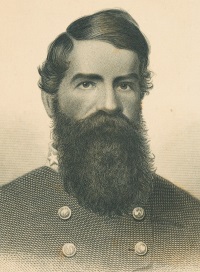
The discussion eventually turned to the impending crisis. Ashby told Armistead that the Civil War really began with John Brown’s insurrection at Harpers Ferry, and that those behind Brown would keep on until they forced the South to secede. Ashby told of leading his militia company, the Mountain Rangers, to Harpers Ferry, but arriving too late to participate in Brown’s capture. He and his company later patrolled the Potomac River for other insurrectionists and witnessed Brown’s hanging in Charles Town.7
The two discussed the upcoming 1860 presidential election and the respective candidates running for office. Ashby, “a strong Union man and fundamentally opposed to the concept of secession,” preferred the Bell/Everett ticket “over the out-and-out secessionist candidate John C. Breckenridge.” Armistead’s choice is unknown. Ashby spoke of the danger that the election of the Republican candidate would have. He believed that it would disrupt the Union, tear the country apart, and result in a bloody Civil War.8
Armistead listened in silence until Ashby finished. He could see the gloom in Ashby’s eyes. Armistead did not “believe that such was the case.” He told Ashby he didn’t believe they would force a dissolution of the Union. He said he couldn’t think of such a thing, and that he was all for the Union and that he had given the best years of his life in its military service. After a few moments, Armistead suddenly started up and exclaimed, “Turner, do not talk so; I know but one country and one flag. Let me sing you a song and drive away your gloom.” With that Armistead started singing “The Star-Spangled Banner.” Ashby, touched by his friend’s attempt to console him, soon joined in heartily.9
Here were two future Confederate generals singing together about a United States’ flag that had been saved by one of the singers’ relatives and which had inspired Francis Scott Key 46 years earlier to write the words of the song that they were lustily singing. It is tragically ironic that these two men were cheering themselves up by remembering the flag and the Union, because in a year both of them would turn their backs on that flag and fight to divide the country that it represented. Each would be killed leading charges in that secessionist cause – Ashby at Harrisonburg and Armistead at Gettysburg a year later. Neither of them would ever see the Stars and Stripes wave once more over a united nation or join their voices in singing “The Star-Spangled Banner.”

Footnotes (Click on the book links below to purchase from Amazon. Part of the proceeds from any book purchased from Amazon through the CCWRT website is returned to the CCWRT to support its education and preservation programs.)
1Short History of “The Star-Spangled Banner,” American Battlefield Trust.
2Clague, Mark, The Problem and Potential of “The Star-Spangled Banner,” Chorus America, September 9, 2022. O Say Can You Hear: A Cultural Biography of “The Star-Spangled Banner,” National Endowment for the Humanities. “The Star-Spangled Banner” officially became the National Anthem of the United States by an act of Congress and signed into law on March 3, 1931 by then-President Herbert Hoover. Music of the 1860’s, American Battlefield Trust.
3Facts about the Star-Spangled Banner, Smithsonian Institution
4Dozier, Graham, Lewis A. Armistead (1817–1863), Encyclopedia Virginia. Eicher, John H., and Eicher, David J., Civil War High Commands, Stanford, CA, Stanford University Press, 2001, p. 107. Krick, Robert K., The Parallel Lives of Two Virginia Soldiers: Armistead and Garnett, The Third Day at Gettysburg & Beyond, ed. Gary W. Gallagher, Chapel Hill, NC, The University of North Carolina Press, 1994, pp. 99-100. Wert, Jeffery D., Lewis Addison Armistead, The Confederate General, Volume 1, ed. William C. Davis and Julie Hoffman, National Historical Society, 1991, pp. 40-41.
5Krick, Parallel Lives, p. 101. Foote, Shelby, The Civil War: A Narrative, Volume 2, New York, Random House, 1963, pp. 533-534. Wright, John D., The Language of the Civil War, Westport, CT, Oryx Press, 2001, p. 179.
6Thomas, Clarence, General Turner Ashby: The Centaur of the South, Winchester, VA, Eddy Press Corporation, 1907, p. 15. Krick, Parallel Lives, p. 111. Returns From Regular Army Infantry Regiments, June 1821-January 1901, September 1859-June 1861, M665, Roll 68, National Archives.
7Ramey, Emily G., and Gott, John K., eds., The Years of Anguish: Fauquier County, Virginia, 1861-1865, Fauquier County Civil War Centennial Committee, 1965, reprint, Heritage Books, Westminster, MD, 2008, pp. 158, 162.
8Avirett, James B. The Memoirs of General Turner Ashby and His Compeers, Baltimore, Selby & Dulany, 1867, reprinted Lucy B. Roper, 2013, p. 49. Dufour, Charles L., Nine Men in Gray, Lincoln, Nebraska, University of Nebraska Press, 1993, p 46.
9Ramey & Gott, The Years of Anguish, p. 158. Avirett, The Memoirs, p. 46.