
By Dennis Keating
The Cleveland Civil War Roundtable
Copyright © 2026, All Rights Reserved
Editor’s note: This article was originally published in The Charger in January 2026.
During the Civil War, Rhode Island provided 25,236 volunteers to the Union’s armed forces. That included 8 infantry regiments, 3 cavalry regiments, and 14 artillery batteries. Of the over 25,000 Rhode Islanders who served, 1,685 died, including Brigadier General Isaac Peace Rodman at the battle of Antietam.
Answering Lincoln’s call for volunteers after Fort Sumter, two of the infantry regiments from Rhode Island (1st and 2nd) were among the first to arrive in Washington City to protect the capital. At the First Battle of Bull Run on July 21, 1861, the two regiments served in the brigade commanded by Ambrose Burnside, Colonel of the 1st Rhode Island. They were engaged on Matthews Hill. The colonel of the 2nd Rhode Island was killed. Dying, he said: “Now show them what Rhode Island can do.” Serving as an aide to Burnside was William Sprague IV, the “Boy” Governor of Rhode Island. In 1863, the wealthy Sprague married Kate Chase, daughter of former Ohio Governor and Lincoln’s Treasury Secretary Salmon Chase. Their marriage ended in divorce in 1882.
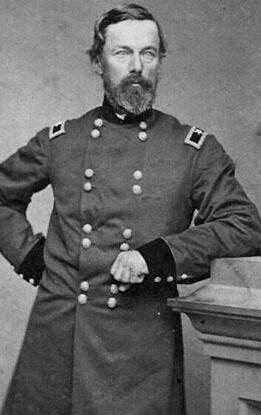
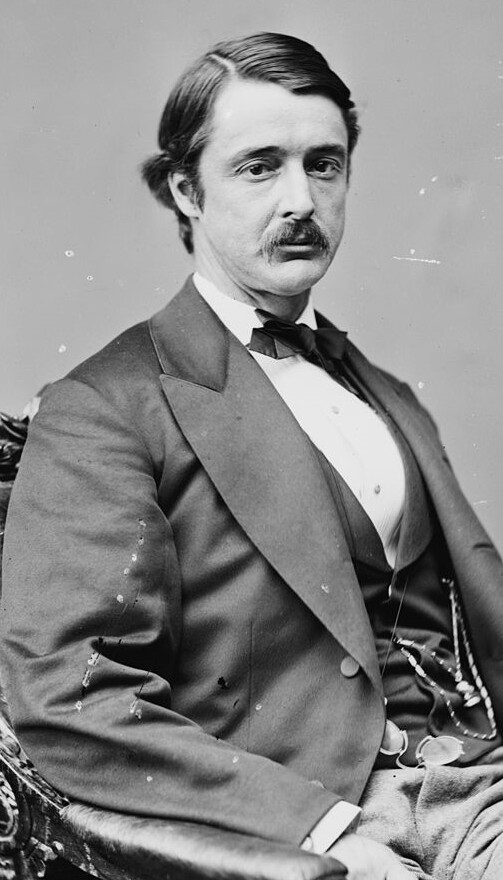
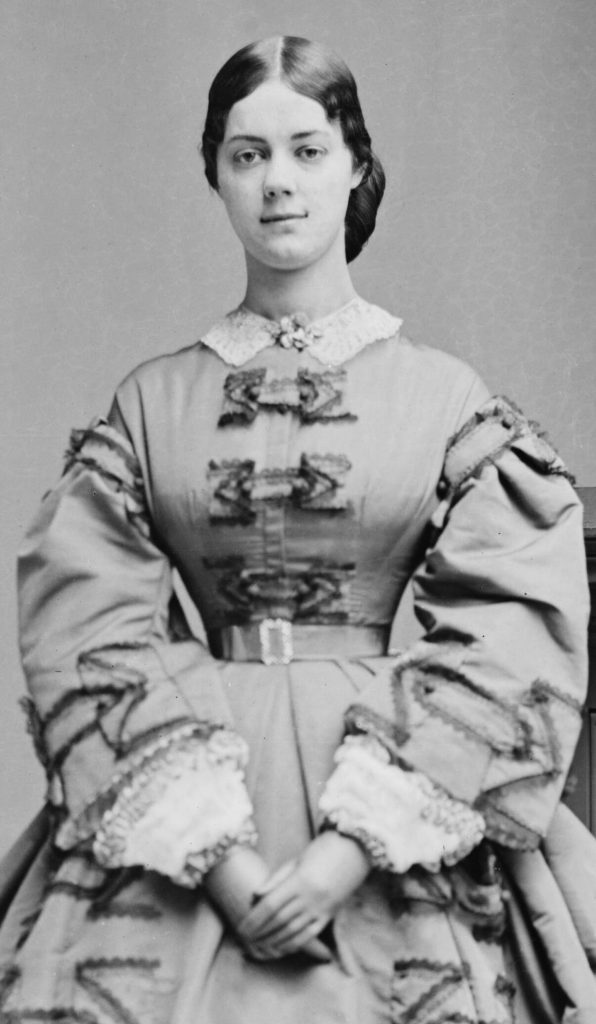
Memorable about the First Battle of Bull Run, as recounted in Ken Burns’ Civil War documentary, was the death of Major Sullivan Ballou of the 2nd Rhode Island. Writing to his “very dear” wife Sarah a week before the battle, Ballou’s lengthy letter included:
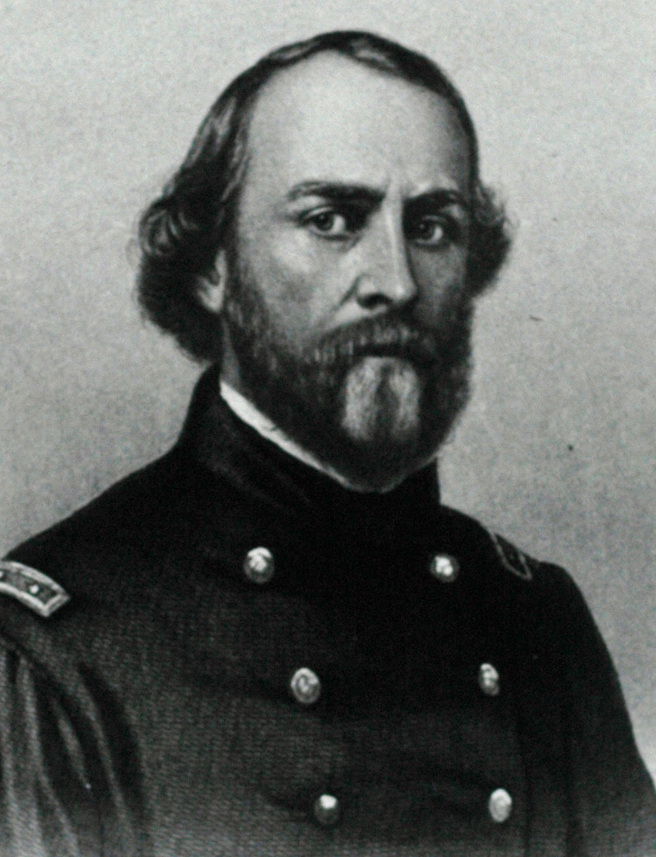
“[Forseeing a battle]…I shall return to my loved ones unharmed. If I do not, my dear Sarah, never forget how much I love you, nor that, when my last breath escapes me on the battle-field, it will whisper your name…But, O Sarah, if the dead can come back to earth and flit unseen around those they loved, I shall always be near you in the garish day, and the darkest night amidst your happiest scenes and gloomiest hours always, always, and, if the soft breeze fans your cheeks, it shall be my breath, or the cool air cools your throbbing temples, it shall be my spirit passing by. Sarah, do not mourn me dear; think I am gone, and wait for me, for we shall meet again.”
The other memorable battles fought by the Rhode Islanders included:
The capture of New Bern, North Carolina on March 14, 1862 by forces commanded by Ambrose Burnside. The 4th Rhode Island played a key role in this Union victory. This force became the nucleus of the IX Corps of the Army of the Potomac.
At Gettysburg on the third day, a gun of Battery A of the 1st Rhode Island Light Artillery attached to the II Corps helped to repel the Confederate attack at the Angle. The battery suffered 4 dead and 24 wounded during the battle. Its monument stands on Hancock Avenue.
The two most recognized Rhode Island army commanders were Ambrose Burnside and George Greene.
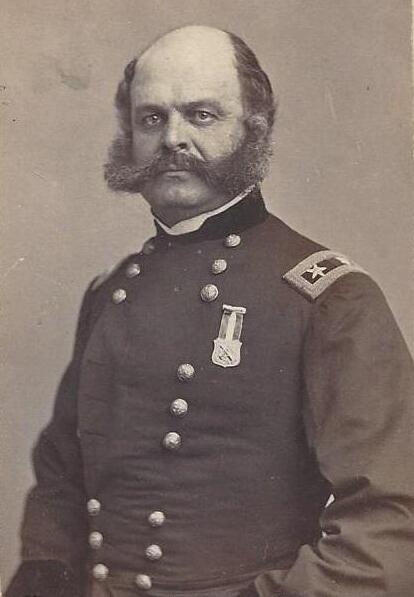
Ambrose Burnside’s military legacy was his failure at the battle of Antietam to lead his wing in a timely fashion against Robert E. Lee’s badly outnumbered defense of Sharpsburg, his devastating defeat at Fredericksburg as commander of the Army of the Potomac, and his disastrous decision that led to the virtual Union massacre at the attack on Petersburg at the Battle of the Crater, which resulted in his removal as the IX Corps commander. Burnside did successfully defend Knoxville, Tennessee against James Longstreet at the Battle of Fort Sanders.
A notable incident occurred on May 1, 1863, after Burnside, commanding the Department of Ohio, issued an order forbidding criticism of the Union war effort as an act of treason to be tried by a military tribunal. That night, Union troops arrested Ohio Congressman and Copperhead enemy of the Lincoln administration Clement L. Vallandigham for a speech at a public rally in Mount Vernon, Ohio, in which Vallandigham called Lincoln a tyrant. Vallandigham was tried and found guilty of treason. However, not wanting to make him a martyr, Lincoln exiled Vallandigham to the South. He later ran unsuccessfully for Ohio governor from refuge in Canada and then was instrumental in crafting the peace platform of the Democratic Party’s defeat in the 1864 presidential campaign.
After the war, Burnside was elected governor of Rhode Island three times (1866-1869) and U.S. senator (1874-1881). He was also elected commander of the Grand Army of the Republic (1871-1872) and also was the first commander of the National Rifle Association (1871). Burnside is probably best known for his sideburns (from a transposition of the syllables of his surname Burnsides).
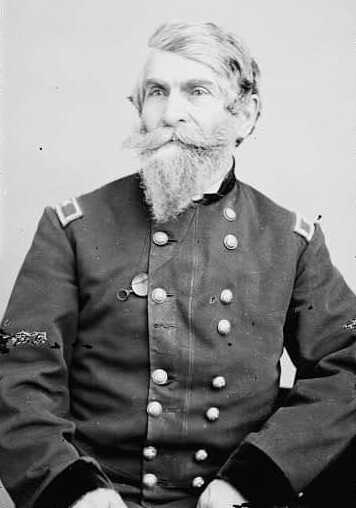
Before the war, George Sears Greene was a civil engineer and a founder of the American Society of Civil Engineers and Architects. A West Pointer, he rejoined the army at the age of 60 and was appointed colonel of the 60th New York Volunteer Infantry. He became a brigadier general in 1862. Greene’s best moment in the war came at the Battle of Gettysburg. On the second day, his New Yorker brigade of the XII Corps was left by itself to defend Culp’s Hill. Greene’s entrenchment of Union troops there was key to repelling Confederate attacks, and his statue now stands there. That fall Greene went west with the corps but was severely wounded defending Chattanooga. He ended the war in North Carolina and died at age 97 on January 28, 1899, which bookended his long and entirely 19th-century life after his birth on May 6, 1801.
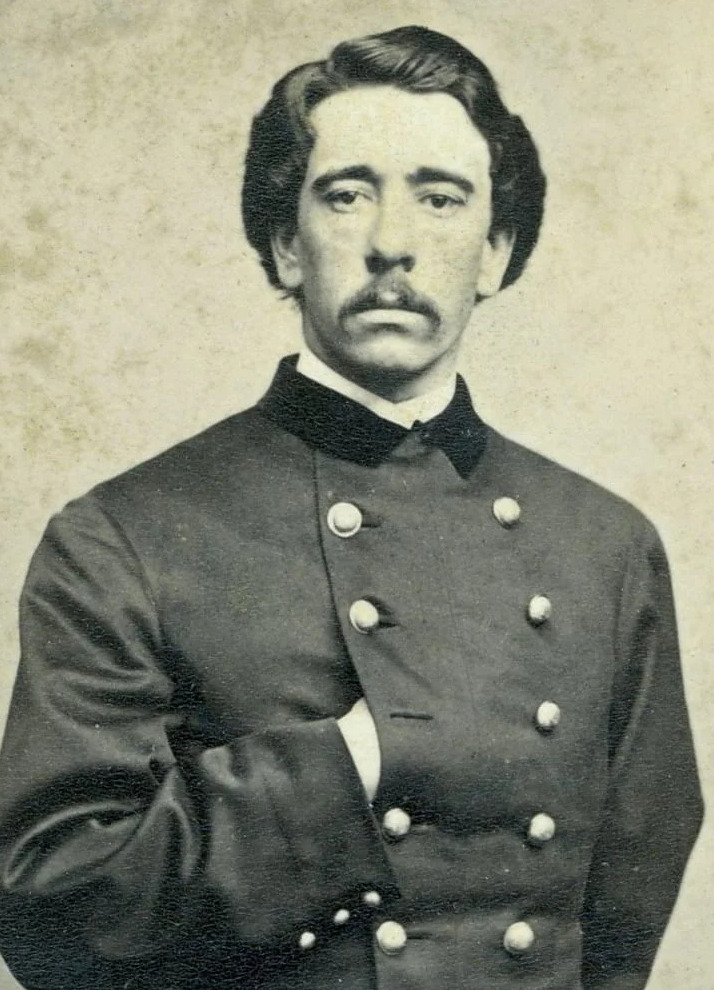
A Rhode Island soldier who gained fame posthumously was Elisha Hunt Rhodes of the 2nd Rhode Island. His wartime diary was quoted frequently in the Ken Burns’ Civil War documentary. From being a corporal, Rhodes advanced to the rank of lieutenant colonel in command of the regiment in 1865. He led a successful attack on the Petersburg defenses on April 2, 1865. After the war, he never missed a regimental reunion and died in 1917.
Despite its small geographic size, Rhode Island is large in stature with regard to its Civil War contributions.

References (Click on the book links below to purchase from Amazon. Part of the proceeds from any book purchased from Amazon through the CCWRT website is returned to the CCWRT to support its education and preservation programs.)
Sarah Kay Bierle. “Move at the Sound of the Bugle, …Straight to the Front“; Emerging Civil War (April 2, 2019)
Frank L. Grzyb. Hidden History of Rhode Island and the Civil War. The History Press, 2013.
“My Very Dear Wife” – The Last Letter of Major Sullivan Ballou; National Park Service
Robert Hunt Rhodes. All for the Union: The Civil War Diary and Letters of Elisha Hunt Rhodes.