
By Steve Pettyjohn
The Cleveland Civil War Roundtable
Copyright © 2025, All Rights Reserved
Dates: September 25-28, 2025
Location: Vicksburg, Mississippi
Participants: 35 members and guests
Editor’s note: The photographs in this field trip report were generously provided by Jose Esparza and Steve Pettyjohn as indicated for each photograph.
The Trip
The Cleveland Civil War Roundtable conducted its 2025 annual fall field trip to Vicksburg, Mississippi from September 25-28 under the leadership of President Judge Charles Patton with the able assistance of Field Captain and Adjutant Bob Pence. The Vicksburg Campaign is one of the most important military campaigns in U.S. history and demonstrates the generalship of Ulysses S. Grant at its best. Grant’s Vicksburg Campaign has been hailed by many military historians as brilliant and worthy of being called Napoleonic. However, due to its geographic location in the Western Theater of the Civil War, the Vicksburg Campaign has always taken second fiddle to Gettysburg in the Eastern Theater.
(Photo credit: Steve Pettyjohn)
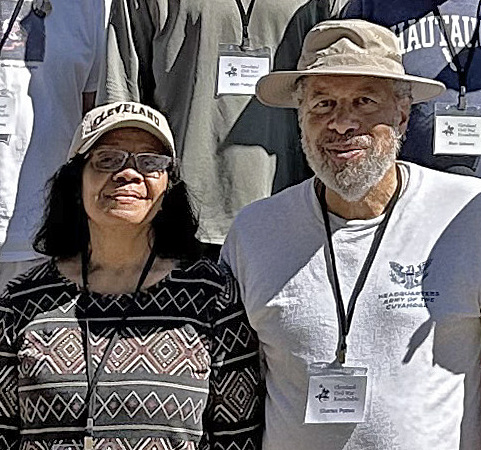
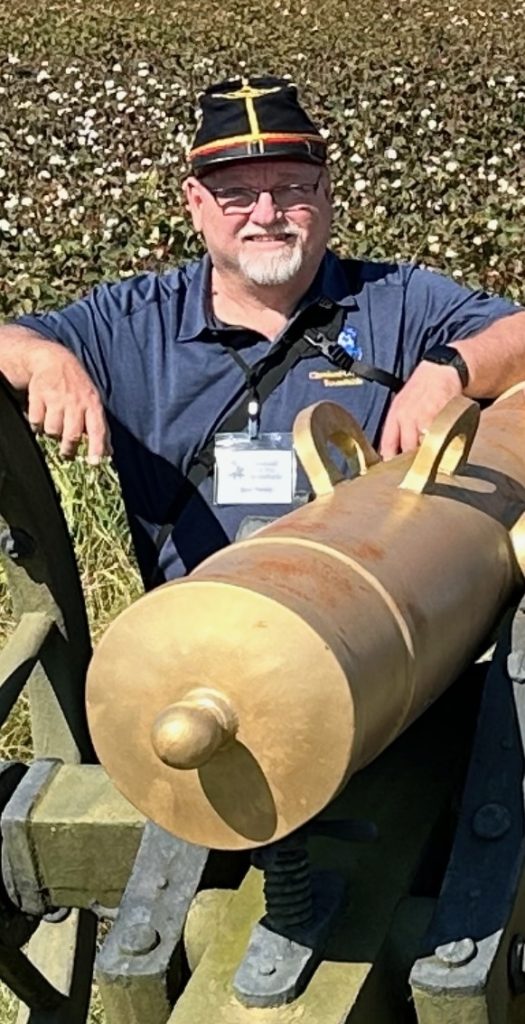
Accolades and congratulations are due to both Judge Patton and Bob Pence for the outstanding organization and planning that made this field trip a splendid success for the 35 members and guests who participated. Our Roundtable had not visited the site in 30 years, because it is quite a hike from Cleveland. This made the decision to go to Vicksburg momentous and then carrying out such an excellent trip remarkable. Both Judge Patton and Bob Pence visited Vicksburg during separate reconnaissance missions in the months preceding the trip. The resultant planning, logistics, and transportation arrangements all contributed to the success of the field trip.
(Photo credit: Steve Pettyjohn)
Members had a few choices for travel arrangements. One option was riding as passengers in a large van that stopped at the Franklin battlefield as part of a two-day drive to Vicksburg. Another option was for participants to use their personal cars to drive. The third option was to fly into Jackson, Mississippi and then, once in Jackson, to either rent a car or ride in one of the two large vans rented beforehand by the Roundtable to transport field trip participants to Vicksburg. The choice of the Courtyard by Marriott was very good, because the accommodations were excellent and we were only a few minutes from the battlefield and from access to the highways needed to study the maneuver campaign.
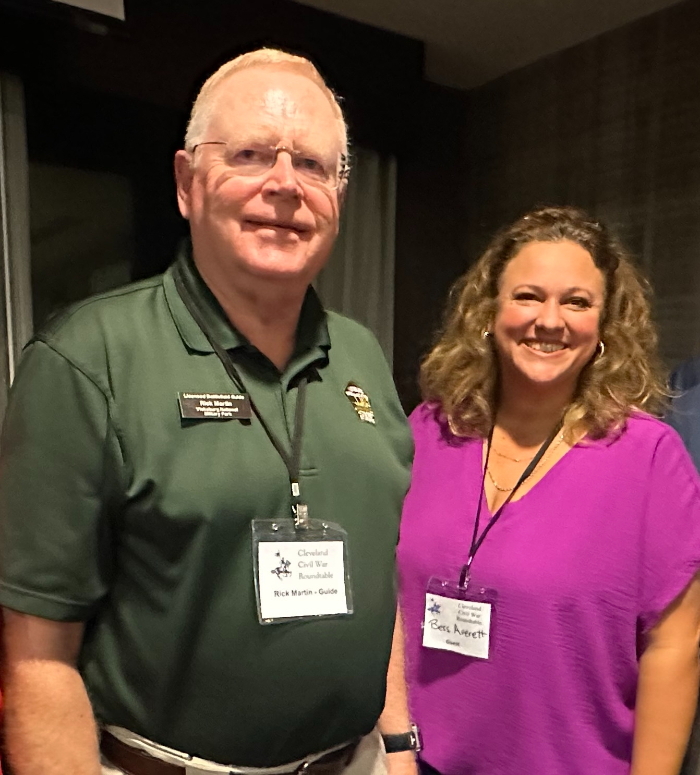
The choice of our guide, retired Chief Ranger Rick Martin, was first-rate, as he was able to give truly insightful and detailed observations, not only regarding the Vicksburg Campaign, but also about the efforts to restore and maintain the main site at Vicksburg as well as the battlefield sites that were part of the maneuver portion of the campaign. Luck was also on our side as a cold front went through the area on Wednesday, which decreased temperatures to the low to mid-80s for the duration of our trip. Finally, a big thank-you to Mrs. Ethel Patton, who chose the Walnut Hills restaurant for our Saturday evening dinner and meeting. It was excellent.
Thursday Evening Briefing
When we checked in at the Courtyard by Marriott, we were reminded of the importance of the Vicksburg Campaign to the history of the U.S. Army. The lobby of the hotel was occupied by a number of young men and women, who were in their late 20s and early 30s, along with a couple of older folks who were obviously group leaders. I speculated that they were officers and candidates from the Army General Staff School in Fort Leavenworth. On my first visit to Vicksburg in 2004, I shared the Hampton Inn with a class from there who were on their staff ride, which was a study of the Vicksburg Campaign (staff ride being sort of the final exam). Sure enough, when Judge Patton and I approached them, we learned that indeed they were a class from the General Staff School, except the group was now called the School for Advanced Military Studies. We had an interesting discussion before leaving for dinner.
(Photo credit: Steve Pettyjohn)
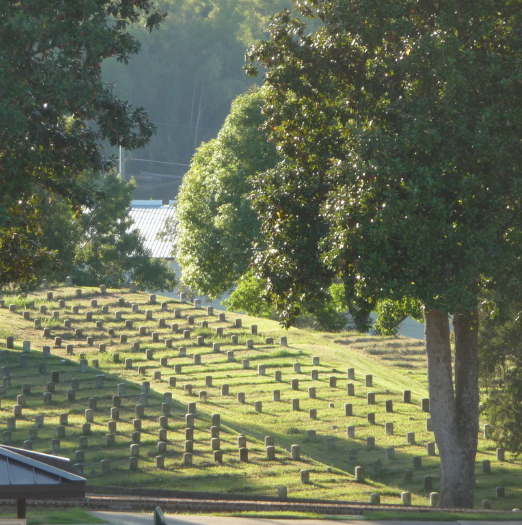
After dinner, we convened for the general briefing provided by Judge Patton, Bob Pence, and Chief Ranger Rick Martin. As is usual for field trips, this briefing addressed timing, safety tips, recommendations for clothing, and the schedules for Day 1 and Day 2. We were also given a briefing on the condition of the park, which I found to be in some ways disappointing. Due to failures of preventive maintenance and effective park management over the last few years, access to several areas had been lost because of roads collapsing. Therefore, we would not be able to see the Grant Monument, Sherman Circle, U.S. Navy Monument, National Cemetery, and some other areas on the south side of the park. In addition, the magnificent Illinois Monument had been closed for a much-needed 1.5-million-dollar restoration. This monument was purposefully built after the completion of the Pennsylvania monument at Gettysburg to ensure that it is larger and more elaborate.
A more positive picture was presented by Bess Averett, Executive Director of the Friends of Vicksburg National Military Park. Founded in 2008, this group is playing catch-up relative to its sister organization in Gettysburg, but is making considerable progress to improve the park. Funding and planning are underway for an impressive and new park visitor center that will be operated by the Friends in conjunction with the National Park Service and the state of Mississippi. Hearing about all of the plans along with the fundraising operations that were being successfully implemented left me with the impression that within two to three years considerable progress will have been made, and visiting the park and area a few years from now will be an all new and exciting prospect.
Day 1: The Maneuver Campaign
For our Friday adventures to examine Grant’s brilliant campaign to capture Vicksburg, we were able to travel together on a brand-new bus under the able direction of our guide, Rick Martin. One of the advantages of our Roundtable field trips is our wonderful experience of having local guides who are historians to help us understand the events we are studying. This trip was no exception. We were able to access areas that the typical tourist and even a dedicated historian might have trouble finding and interpreting.
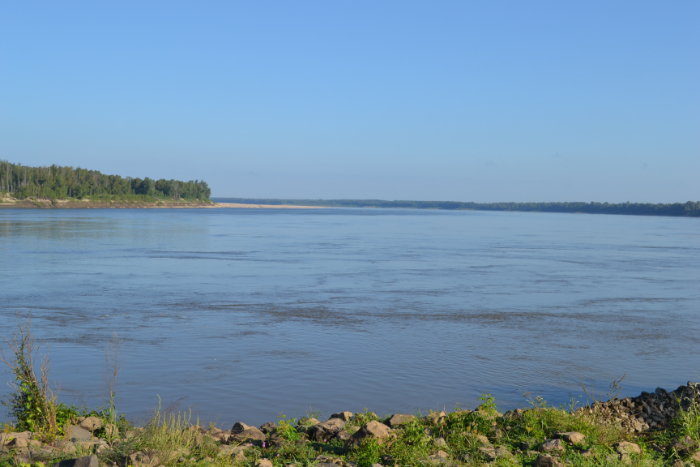
Our stops included the Mississippi River in the area of Bruinsburg where Grant landed, Grand Gulf where the initial attempt to land was repulsed, the battlefields at Port Gibson and Raymond where attempts by different Confederate generals to stop Grant’s advance were stymied, the road to Jackson, and finally the battle at Champion Hill where John C. Pemberton was decisively defeated. As evidence of the enormous significance of the Vicksburg Campaign, Winston Churchill, in his book The Great Democracies, called Champion Hill the most important battle fought on the North American continent.
(Photo credit: Jose Esparza)
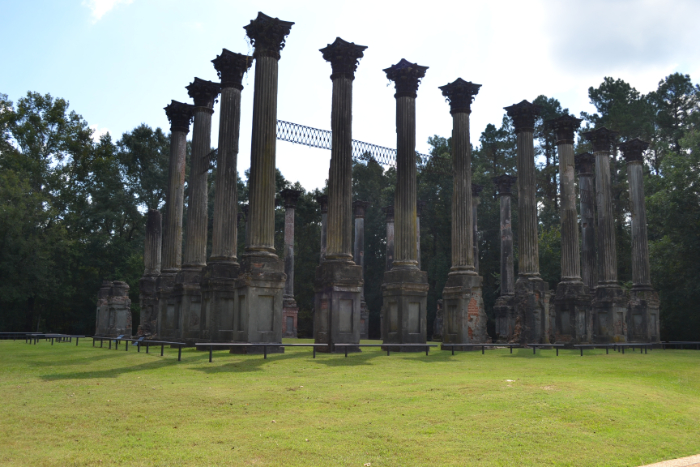
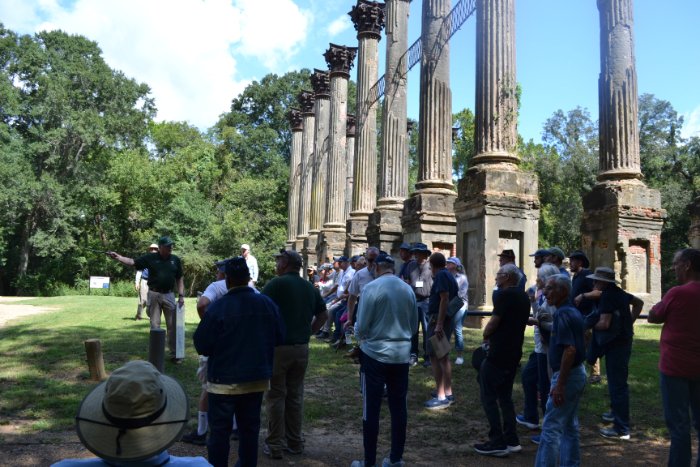
We stopped at the impressive Windsor Ruins for a break and a chance to enjoy our box lunches. There are a dozen and a half towering columns that are the ruins of this mansion that was supported by a plantation of over 300 enslaved persons. It gave us all pause to think about the institution, society, and economy represented by these ruins.
(Photo credit: Jose Esparza)
(Photo credit: Jose Esparza)
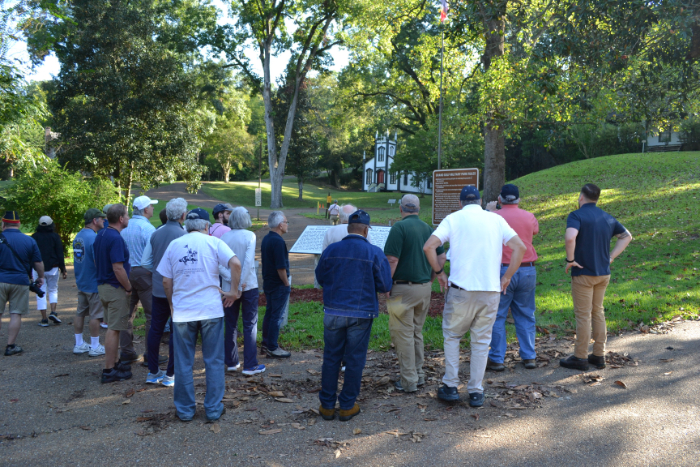
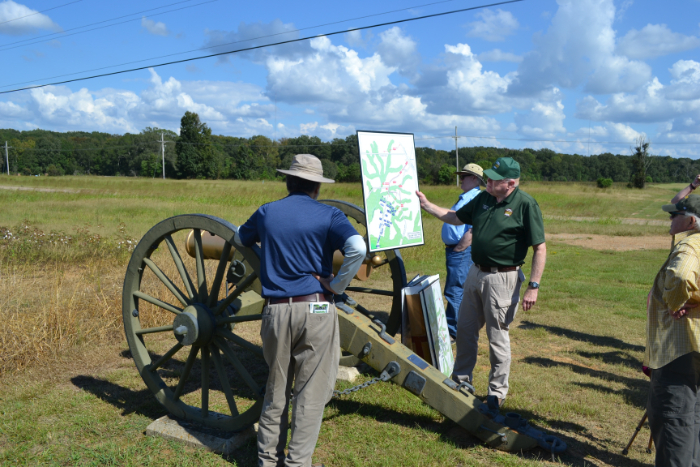
At Grand Gulf, we explored one of the two forts that are part of the site, the very interesting museum, and other buildings. Our members also helped save our bus and bus driver from calamity by holding back low-hanging tree branches that blocked the road and short-circuited our tour of the Grand Gulf area. The Raymond battlefield has seen considerable restoration and improvement since my last visit there about 10 years ago.
(Photo credit: Jose Esparza)
(Photo credit: Jose Esparza)
The stops at Port Gibson and Raymond were good reminders of the value of the local guide, as Rick Martin did a wonderful job of interpreting the terrain and the battlefield maneuvers of both sides. Throughout the entire field trip, Rick Martin was exceptional in explaining the overall Vicksburg Campaign and the individual battles.
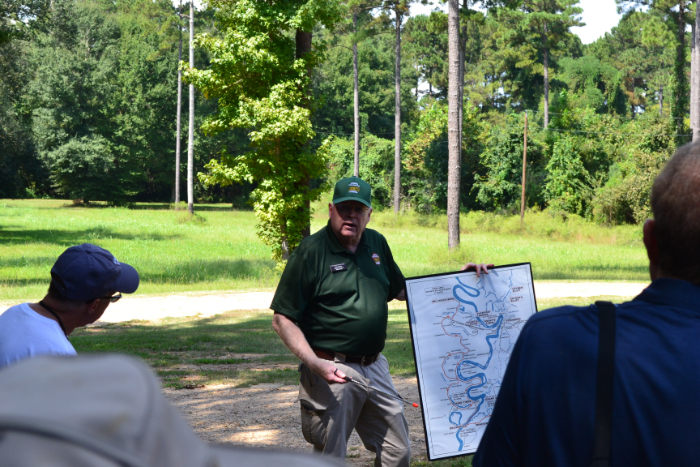
(Photo credit: Jose Esparza)
We stopped at two sites for our review of Champion Hill. The first was Coker House on the south side of the battlefield, where John McClernand failed to move aggressively, and the second was at the crossroads, which was a key feature of the northern part of the battle where Ulysses Grant and James McPherson came close to encircling the Confederates.
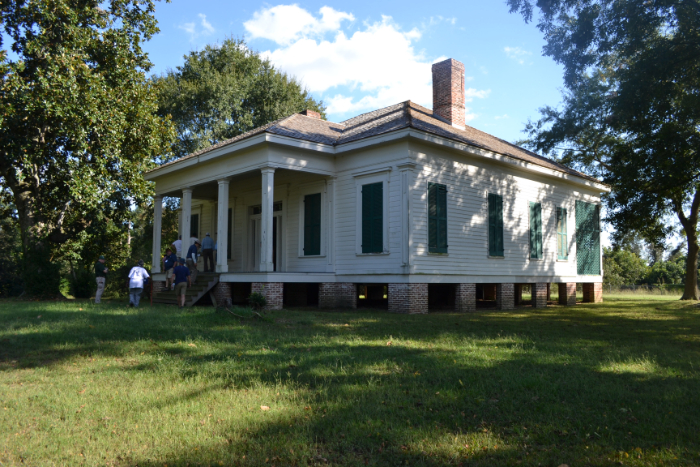
(Photo credit: Jose Esparza)
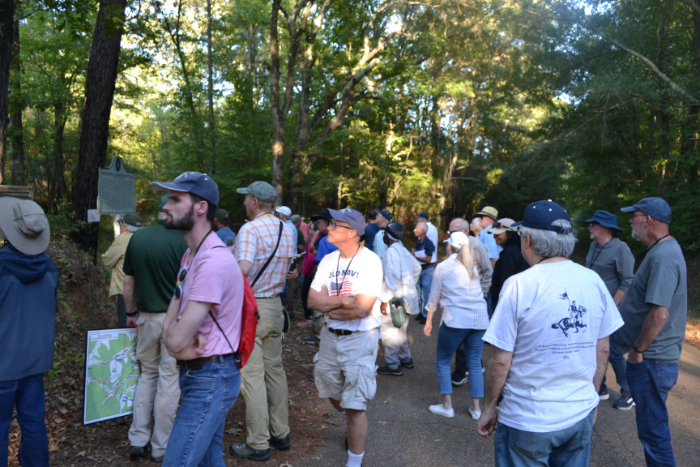
(Photo credit: Jose Esparza)
Being on the ground and having an extremely knowledgeable guide gave us a very good understanding of the issues of command and control for both sides. The terrain in many places remains the same as during the battle. Its degree of roughness and danger makes the so-called “Wilderness” in northern Virginia look like a grade school playground. It is easy to see why messages were lost or delayed and overall control was difficult. The American Battlefield Trust recently obtained considerable parts of the battlefield from Sid Champion V, which facilitated our visit to this site.
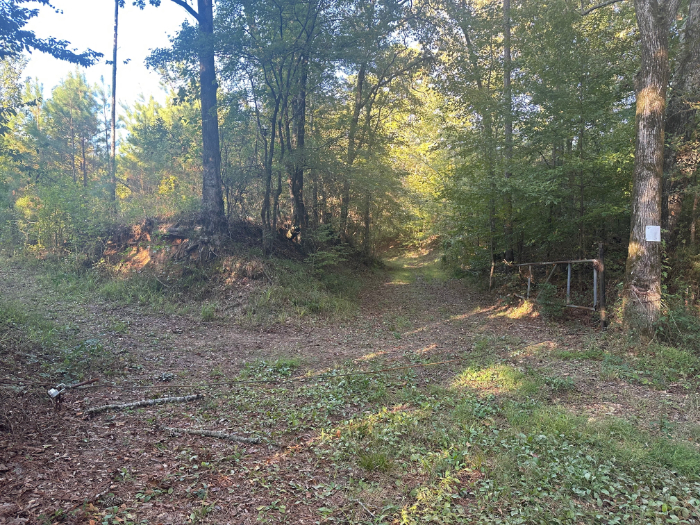
(Photo credit: Steve Pettyjohn)
We saw the new memorial to historian Ed Bearss, which is at the crossroads (Jackson Road, Middle Road, and Raymond Road). However, the area is underdeveloped and under-interpreted. We were told to look out for snakes, ticks, and even bears. Because this location is not sufficiently developed for an optimal battlefield experience, visitors should not expect a Gettysburg-like experience – yet.
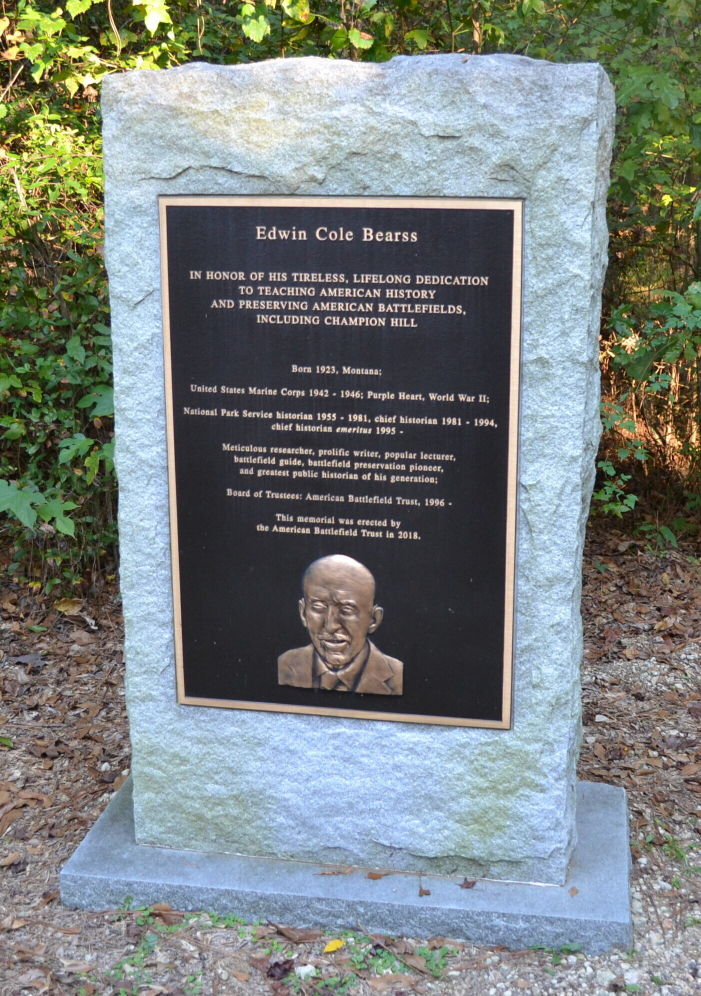
(Photo credit: Jose Esparza)
Day 2: Vicksburg Siege and Surrender
Day 2 of our visit was devoted to the Vicksburg National Military Park where we were able to stop at and see a number of the important sites, but not all of the important sites, as mentioned above. Our first stop at Battery DeGolyer, part of the area of operations of McPherson’s Corps, gave our guide the opportunity to provide insights into the Confederate fortifications and defensive scheme while also showing the difficulties faced by Union soldiers in conducting the two failed assaults on May 19 and May 22. These difficulties were reinforced later in the day when we visited the Confederate defenses at Stockade Redan, which was assaulted by William T. Sherman’s Corps, and where the famous and gallant actions of the 13th U.S. Infantry Regiment earned that unit the nickname of “First at Vicksburg.”
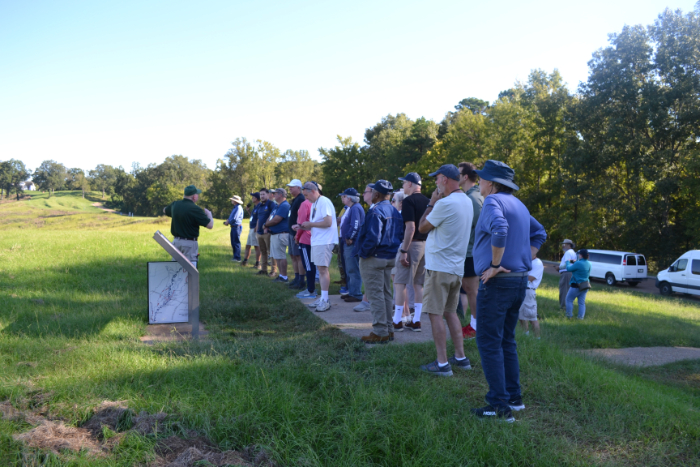
(Photo credit: Jose Esparza)
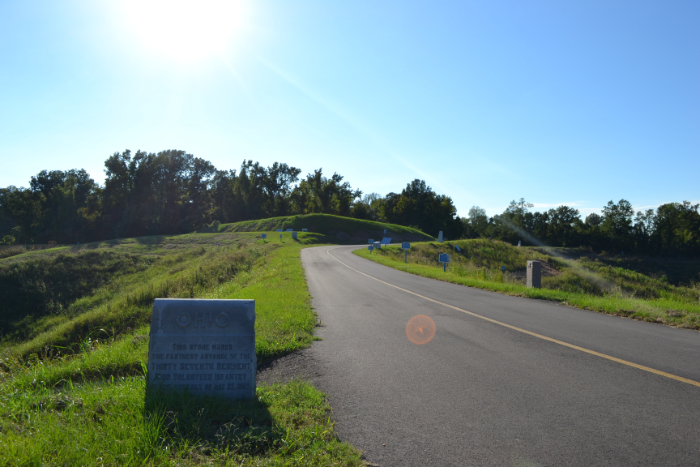
(Photo credit: Jose Esparza)
Our visit included a stop at the Railroad Redoubt, assaulted by troops from Iowa in McClernand’s Corps, who made a lodgment but were forced out by a ferocious counterattack by Texas regiments. The forts in this area guarded roads or railroads that presented gaps in the defenses. All of the Union assaults were funneled into the only semi-level ground available, which basically followed the roads and led into the teeth of the defenders’ firepower. The forts were 20 feet or more in height above the surrounding terrain, and most had a trench in front of them. Photographs do not do justice to the difficulty of assaulting these positions. This is why actually being at sites like these makes it possible to truly observe what the soldiers were up against and gain a much better sense of what they experienced. This is definitely one of the greatest benefits of the field trips.
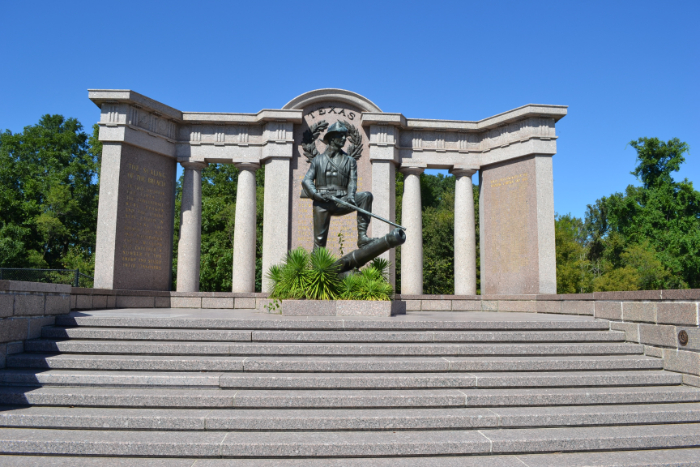
(Photo credit: Jose Esparza)
Rick Martin then explained one important aspect of the Union’s siege strategy by showing the placement of artillery at the site along with how artillery supported siege tactics. After failing in the two assaults due in part to the strength of the defenses and also to poor coordination of the attacking units, the Army of the Tennessee conducted very capable siege operations with a handful of trained engineers giving effective direction to the thousands of volunteers, who brought expertise from their civilian lives. This was emphasized when we stopped at Shirley House and when we visited the exterior of the Illinois Monument and the adjacent siege lines extending to the Third Louisiana Redan, fortifications that were blown up by a mine on June 25. While the follow-up assault failed, the impact of this attack along with the knowledge that other mining tunnels were being built (six in all) were some of the factors that induced Pemberton to surrender.
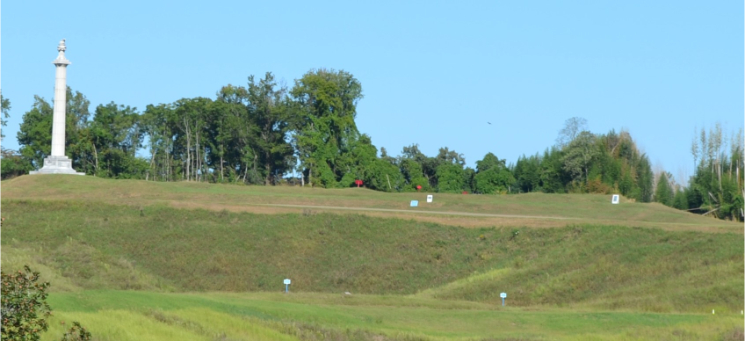
(Photo credit: Jose Esparza)
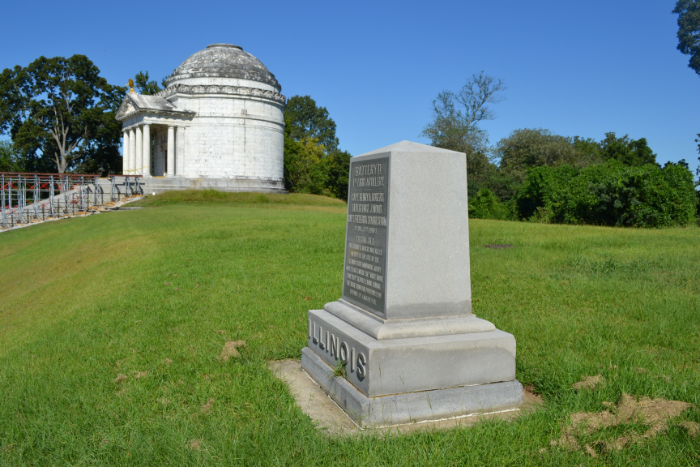
(Photo credit: Jose Esparza)
Rick Martin pointed out that the Confederate defenders lost about 3,500 men during the siege, while Union losses were about 1,500. These figures were the reverse of the results of the two assaults in May, when Union losses were over 3,500 and Confederate losses around 1,500. Skillful positioning of trenches and sniper positions along with massive artillery firepower that was situated for maximum advantage created the favorable Union results during the siege. In addition, Union troops rotated in and out of the trench lines, while Confederate defenders were left in the line for the duration of the siege. This led to exhaustion for the defenders, who were then prone to making fatal mistakes and to be far less effective in returning fire. Our major briefings for this part of the visit were held at Battery DeGolyer and Shirley House.
The survival of Shirley House during the siege is nothing less than miraculous. It stands within 100 yards or so of the siege lines and is the only house that was not destroyed. It has been preserved and is open for tours at times. While there, we had the chance to review plaques recognizing the enslaved people who worked at Shirley plantation and made the plantation’s operation possible. Recent research utilizing diaries, deed books, Freedman Bureau records, and auction advertisements in newspapers have restored their names. This was another opportunity to reflect on the nature of the war.
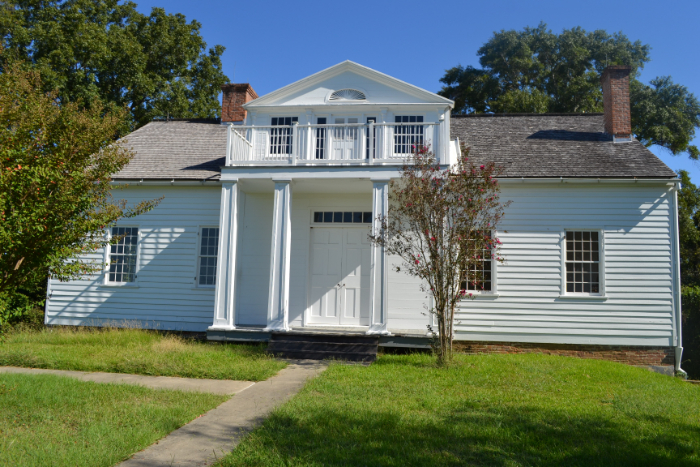
(Photo credit: Jose Esparza)
Our stop at the U.S. Colored Troops Monument reinforced our feelings that slavery and emancipation were the root causes of the war. The monument to the USCT at Vicksburg was the first one honoring African-American troops of the Civil War to be built on a National Parks Battlefield. I am not sure if any other such monuments have been placed at battlefields since then, but this is the most dramatic and symbolic. It shows a wounded USCT soldier being helped by a fellow soldier and an enslaved person.
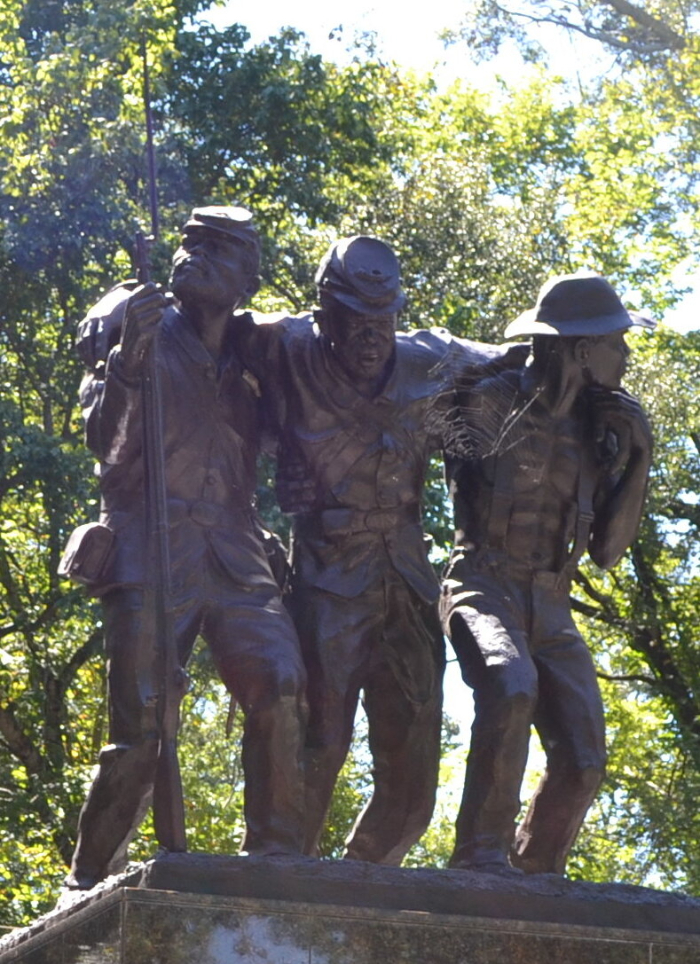
(Photo credit: Jose Esparza)
At this stop, Rick Martin related the story of the Battle of Millikin’s Bend, which occurred in June 1863. A large Confederate force from Arkansas attacked Grant’s major supply base, which was defended by a small regiment of white troops and several regiments of USCT that were in the process of forming and training. Many of the USCT troops were just learning how to load their muskets when the attack occurred. While saved by the prompt action of naval gunboats, the USCT troops were considered to have fought bravely while suffering significant casualties. This fight convinced Grant and others that Black troops would fight and would be a significant addition to Union forces.
USS Cairo
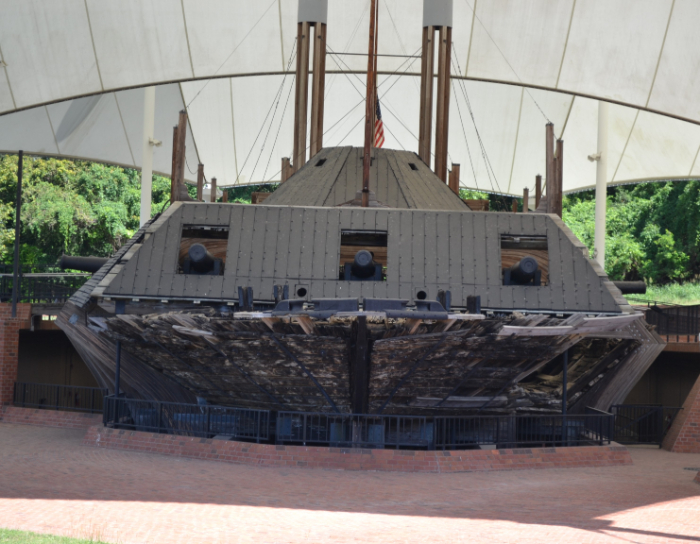
When I first saw the USS Cairo at Vicksburg in 2004, I let out a yelp and an “OH WOW!” Not once, but three times and almost drove off the road. While I wasn’t driving this time, the sight of the Cairo is always inspiring. The USS Cairo was the lead vessel of the City Class ironclad gunboats built to lead the way in clearing the Mississippi and other southern rivers. It was sunk by a naval mine (“torpedo” in Civil War terminology) in December 1862 and disappeared into the depths of the Yazoo River just north of Vicksburg. Almost a century later, it was rediscovered by then-Park Ranger Ed Bearss and his friends and colleagues, historians Warren Grabau and Don Jacks. They were able to raise the ship, and after many trials and tribulations, it has occupied a special place at the Vicksburg National Battlefield Park with its accompanying museum. The museum provides considerable details to assist in understanding the history of the Cairo and its restoration. The ability to walk through the ship really brings its story alive. It was indeed a highlight of our visit.
(Photo credit: Jose Esparza)
(Photo credit: Steve Pettyjohn)
A Note on Statues and Monuments and Other Stuff
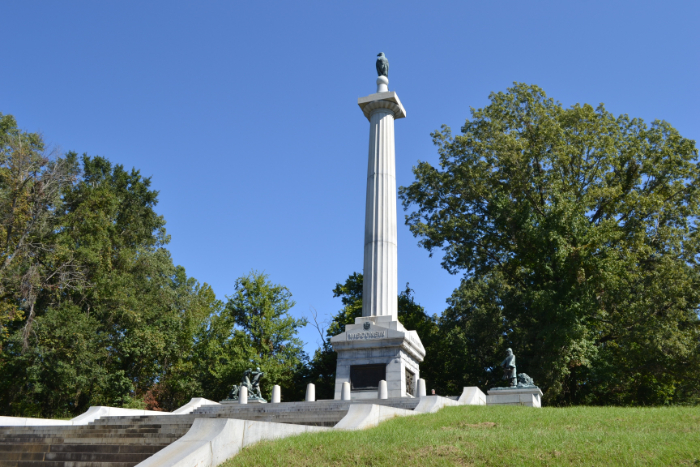
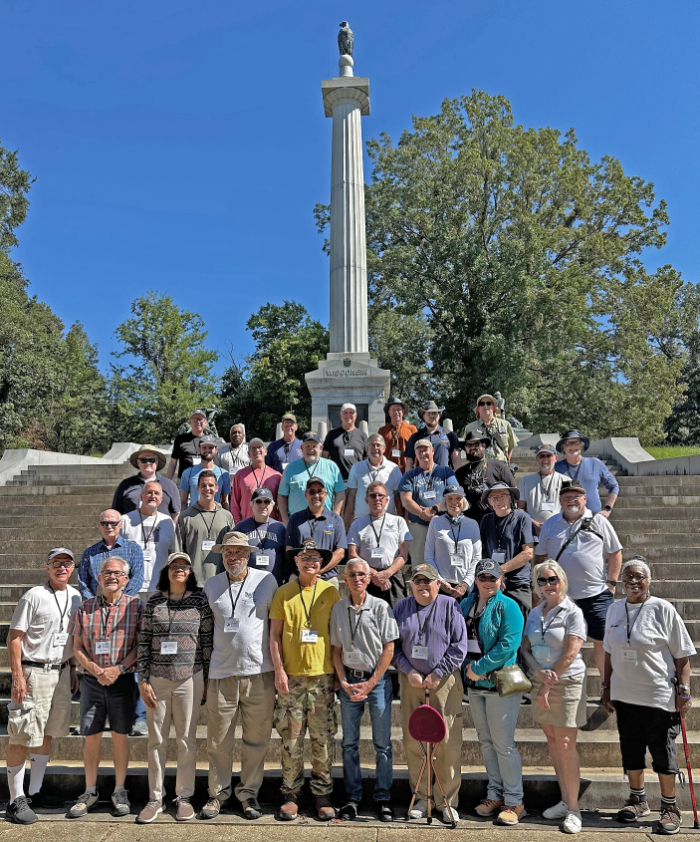
Trivia Question: Which National Military Park has more statues and monuments? Gettysburg or Vicksburg? Answer: Vicksburg with 1,359 surpasses Gettysburg with 1,328. The Vicksburg total includes 245 regimental monuments, of which 39 are from Ohio. It includes impressive state monuments like the Illinois, Texas, Iowa, Minnesota, and Wisconsin Monuments. (The Wisconsin Monument is where we had our group photograph taken.) Vicksburg has heroic statues of generals and other leaders. Jefferson Davis is here along with Indiana’s Civil War Governor Oliver P. Morton. Even Pemberton has a monument. What won’t you find? Start with an Ohio Monument, which is conspicuously missing. Oh, you won’t find a statue of the two Ohio corps commanders: Sherman and McPherson.
(Photo credit: Jose Esparza)
(Photo credit: Steve Pettyjohn)
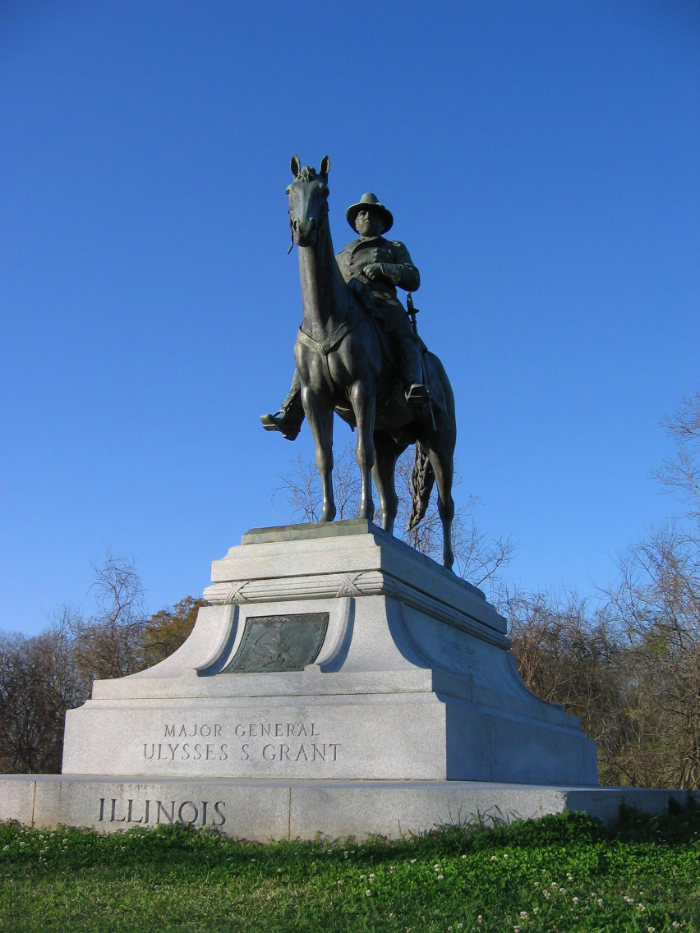
And, yes, there is the impressive equestrian Grant Monument, but check out the large lettering at the base: “ILLINOIS.” Yes, Illinois has claimed Grant at this monument and also at the impressive domed Illinois Monument, where Grant is listed right below Lincoln as important “sons of Illinois.” According to Rick Martin, there is space reserved for an Ohio Monument along with monuments dedicated to Sherman and McPherson, but it will take action by the state of Ohio to build them.
(Photo credit: Steve Pettyjohn)
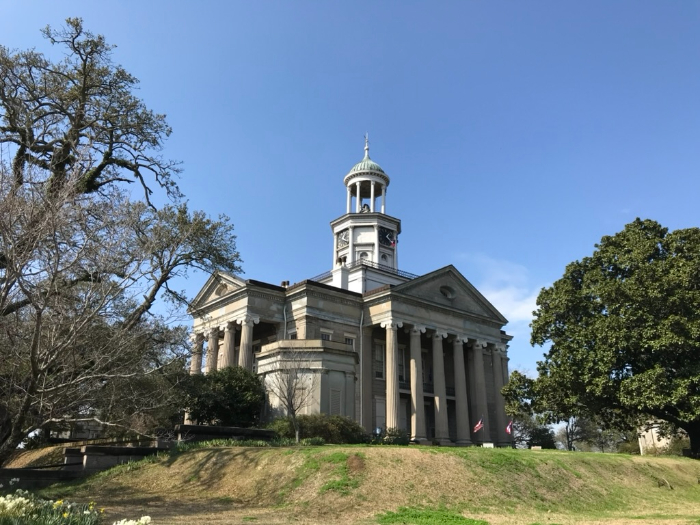
Finally, a note on Vicksburg the town. If you are planning a visit, don’t leave out some of the sites in the city, itself. These include the Old Court House Museum, where Jeff Davis got his start, along with Pemberton’s headquarters and Balfour House, which are down the street from the courthouse. We were able to view them at the end of our trip. Also, Washington Street is the old town area with architecture that resembles New Orleans. It contains restaurants and bars along with a boutique hotel or two. The street was closed while we were there, as the city was celebrating its bicentennial with concerts and a street fair. Plan to spend some time in the city to relax after the battlefields.
(Photo credit: Steve Pettyjohn)
(Photo credit: Steve Pettyjohn)
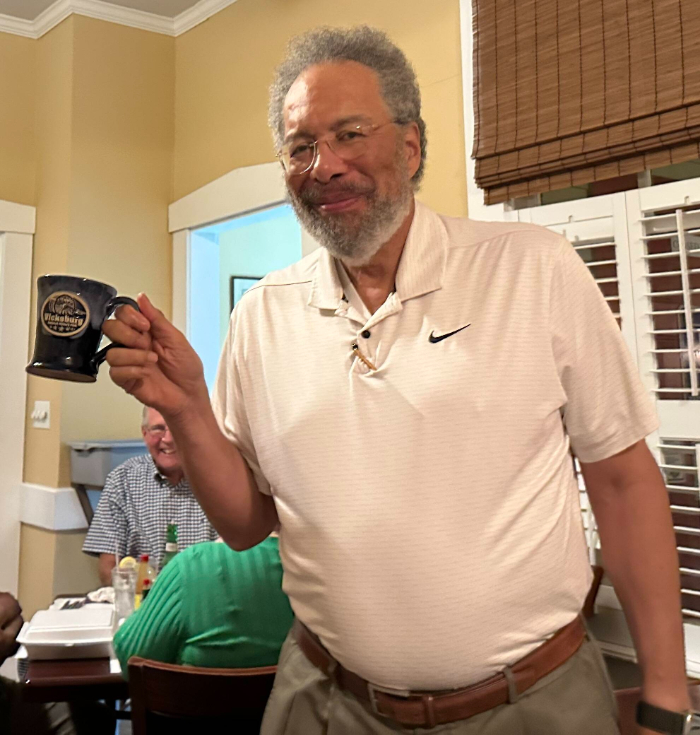
With that in mind, we spent our last evening in Vicksburg together at dinner at Walnut Hills restaurant where we were treated exceptionally by the staff, who graciously accommodated our large group. At the dinner, we recognized Roundtable President Judge Charles Patton and Field Captain and Adjutant Bob Pence for their extensive and outstanding efforts in planning and organizing the 2025 Roundtable field trip. The success of the field trip was due largely to them, and the Roundtable is extremely grateful to both of them.
This ends my comments about our epic trip to Vicksburg. It was quite a trip. Hopefully, our Roundtable will return to a revitalized and more beautiful park sometime in the next decade.
Related links:
List of Roundtable Field Trips
Field trip report for 2008
Field trip report for 2021
Field trip report for 2024